
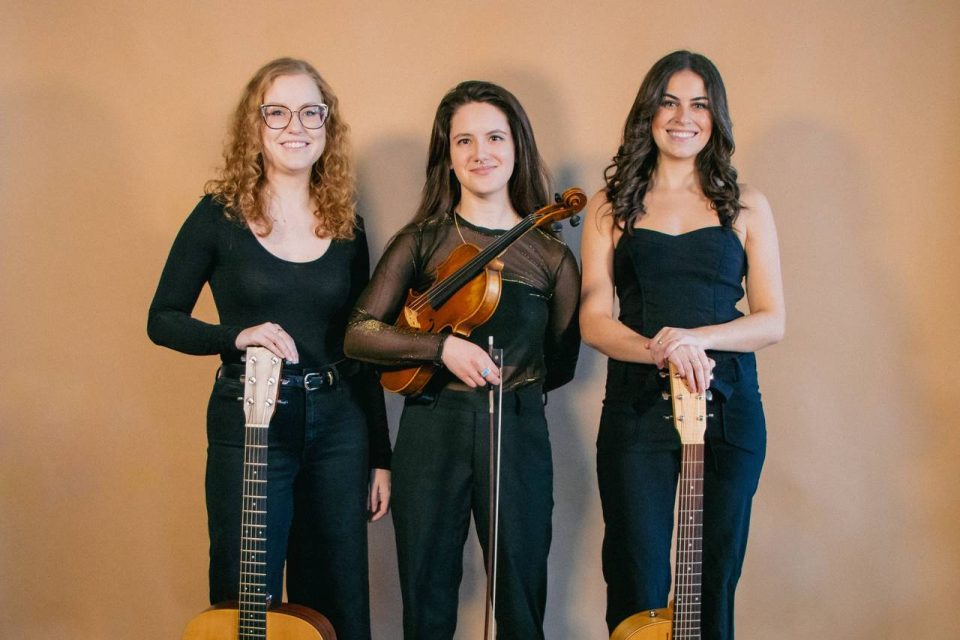
The Toronto fem folk trio on a school assignment that turned into a band, the wedding gig plan that evolved, and why “just keep going” is the whole strategy.
Wildflowers don’t wait to be planted. They turn up where the wind takes them and make a home of it, and that somewhat describes the journey of Wild Bloom. Becky Leigh came from Montreal. Brittany Iwanciwski came from the West Coast. Alyssa Tess grew up near Barrie, Ontario. Humber College pulled all three into the orbit of Toronto, a fourth-year recording assignment locked them into a producing “triangle,” and a graduation-season case of missing each other did the rest.
The original plan was modest: learn a stack of love songs and play weddings. Two months in, an invitation to open at the Dakota Tavern threw them into the deep end with their own songs, and they never climbed back out. In conversation with The Indie Distributor, the trio talks about “Rising Ground,” a song born in a metal practice cubicle about the kind of relationship that keeps finding your email after you’ve blocked it; the fiddle reels Brittany is quietly relearning after COVID scattered Toronto’s Irish session scene; the nuts and bolts of legally releasing a cover; and why their version of success has nothing to do with numbers. Their merch table even sells grow-your-own kits with a wildflower from each of their home provinces. It is a fitting souvenir from a band that keeps blooming in places nobody expected.
A Triangle at Humber
The Indie Distributor: Thank you very much for joining tonight. I am joined by the incredible fem folk trio, and I suppose I’ll frame it as that because I’ve seen that reference a few times, Wild Bloom: Becky Leigh, Brittany Iwanciwski and Alyssa Tess. It says that you hail from Toronto, but you’re from three different provinces, right? I always want to know about the early days, how things got kicked off. You all met at Humber, is that right? So what happened, and what made you decide to actually sit down and become a band?
Becky Leigh: So we met at Humber, and we had this fourth-year recording project. They asked you who you wanted to work with, because you had to be an artist and a producer. So you kind of have to be like, “Oh, I want to produce for this person, and I would like this person to be my producer.” But there was this thing going around where if you picked sort of a triangle, they would kind of give it to you. So we kind of did that. We put all our names in, and we got it. So we kind of co-produced.
Brittany Iwanciwski: I produced Becky’s EP. Becky produced Alyssa’s, and then [Alyssa produced mine].
The Indie Distributor: Oh, really cool.
Becky Leigh: Yeah, [we had that] thing going on, and we kind of got closer then. And then once we graduated, Brittany was like, “We should do like a female folky thing,” you know. And we’re like, “Yeah.”
Brittany Iwanciwski: I think after we graduated, we’re all like, I don’t know, missing the camaraderie and missing each other, and it’s hard to get to see each other. So we’re like, “What if we work together?”
The Indie Distributor: So did you end up relocating prior to going to school? Is that where you all met? And now, are you still separate? How far are you away from each other now?
Becky Leigh: I’m still in Etobicoke, like the Humber area. I’m not too far from school, because I came from Montreal to go to Humber, so I kind of just stuck around once we got the band going and started having connections with people and sort of a reputation. So I stayed, and I’m still living in the Etobicoke area. But they’re not too far. They’re still in Toronto: High Park, and then the East End.
Alyssa Tess: But yeah, Humber is what brought us all into the Toronto GTA area, and then just being here in general, and doing this together, has kept us here as well. So we are Toronto based, but I say it at every show: it blows my mind that we are from three very different places in Canada, or different locations at least. Brittany’s coming all the way from the West Coast. How crazy is it that we met each other and now we get to do this together? I never could have imagined that this could have happened for us.
The Indie Distributor: I love that. I love the convergence, and obviously it was meant to happen, right? So since the early days, you’ve carried along for a few years now as a cohesive unit. How have things changed, and what would you say is the most important lesson you’ve learned from when you first formed to now?
Brittany Iwanciwski: When we first started, we’re like, “Let’s be a wedding band,” and then we went through…
Becky Leigh: A couple things. Yeah.
Alyssa Tess: Yeah, I forgot about that. When we were getting together and rehearsing, we were like, “Oh, we’re gonna get all this repertoire together so we can play all these love songs that people can hire us for their weddings.” And then I think it was like two months into us having told the world and creating social media accounts for our band that one of our peers was like, “Hey, do you want to open for us at the Dakota Tavern?” And we were like, “Okay, I guess so.” And we had to figure out what we were gonna play. So we all sort of brought our own originals that we had written individually and figured out arrangements for them for the three of us together. Started picking cover songs that we wanted to add to our repertoire. And I feel like that gig was the pivotal moment where we were like, “Okay, we’re in it. We’re in the deep end now.” Yeah, we can do this.
The Fiddle and the Session Scene
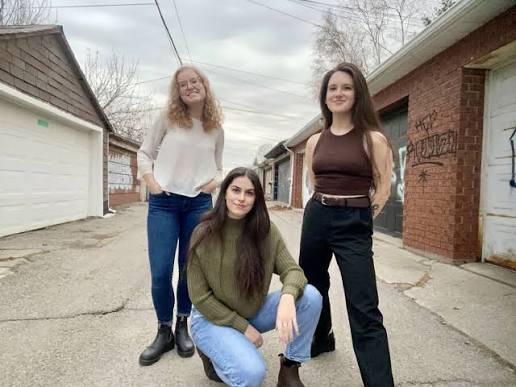
The Indie Distributor: That’s amazing. So obviously you had been doing things earlier as solo artists. When you were producing one another’s EPs, are those released?
Becky Leigh: Yes, I think me and Alyssa, ours are released. Brittany’s is not yet. Brittany’s is top secret, but when it comes out, it sounds so good.
Brittany Iwanciwski: Mine’s like a fiddly one, kind of West Coast fiddle, I’ll say, with some Irish influence.
The Indie Distributor: Excellent.
Brittany Iwanciwski: But I just never got around to releasing it, so I don’t know. I feel like I’m not as into fiddle now.
The Indie Distributor: Oh, really?
Brittany Iwanciwski: Over COVID, yeah. I don’t know why. I used to go to so much fiddle stuff, and then over COVID, I just haven’t made it back yet.
Alyssa Tess: But we do force Brittany to play some fiddle reels in all of our [live shows].
Becky Leigh: We got some. Yeah.
Alyssa Tess: And one of Brittany’s originals that we recorded for [her] EP, we play live now, because it’s just so good. And it’s full fiddle too.
The Indie Distributor: That’s amazing. I’ve seen some fiddle, so that’s why I was wondering, like, wait a minute, you must not have completely given it up. But why do you think that is? Why the transition away from that particular instrument since COVID?
Brittany Iwanciwski: Well, the same instrument, but just the Irish music scene here.
The Indie Distributor: Oh, I see. Okay.
Brittany Iwanciwski: I used to go to all the sessions, and I’ll still play a gig here and there, and I see some of the people once in a while. But I guess a lot of people moved out of town for COVID. Just different. And then over those two years of COVID, I feel like I forgot a lot of this. I’m sure I knew hundreds of songs, and now I kind of have to relearn them all. Yes, time to relearn them all right now.
The Indie Distributor: That makes total sense. There must be a lot of technicality involved. I commend you for playing that instrument. I would not even know where to start.
“Rising Ground”
The Indie Distributor: So, the single “Rising Ground.” First of all, I’d like to know a little bit about what it means to you, and then we’ll dig into more of the technical aspects of the song. What was the origin of that track?
Brittany Iwanciwski: I started with the lyrics. It was when we were back at Humber. I think it was for a songwriting class originally, but I was going through a toxic relationship breakup. Like the one where you block the person, and they find your email, and then they’re emailing you. One of those.
The Indie Distributor: Oh my.
Brittany Iwanciwski: So it’s kind of about that. A toxic relationship where, when you’re in it, it feels nice, and then you get pulled deeper and deeper, and it’s harder and harder to get out of that. And then I’m not the most confident with singing and lyrics, so then Becky helped me to… I don’t know.
Becky Leigh: I feel like we just solidified it a little bit more together. But she did the bulk of it. We just kind of talked through it. And was this in fourth year or third year at this point?
Brittany Iwanciwski: I don’t know.
Becky Leigh: Somewhere at the end of our schooling years. We were in the practice modules. I never know how to describe them. These metal square things, rooms that are like change rooms almost, that have a piano in them. They’re basically just little practice modules that you can go in. We just went in there a couple times and worked through the song. And it’s so nice to hear it years later. It’s been a long one.
Alyssa Tess: So I think “Rising Ground” was maybe one of those songs for that very first gig, way back in 2023, where we were like, “Oh, this is a song that two of the three of us have written. Let’s do it. Let’s figure out how we can perform it live.” And it’s been a song that I think we play at every show, and it stands out. Everyone always comments on it.
Becky Leigh: Yeah, it’s a staple in our set for sure.
The Indie Distributor: So is that normally the way the writing process goes? It starts with one of you, and then eventually the three of you will have your input on it, and it’ll become this organic thing that ends up having a beginning and an end?
Brittany Iwanciwski: I think usually… We’ve done a few co-writing sessions where we got some songs, but generally, yeah, someone will bring a song to the group, and then we…
Becky Leigh: Even if it’s bare bones, and then we’ll talk through it, or figure out arrangements, or switch it up however we want. But yeah, we’ve also done a couple, like Brittany said, more co-writing, and those are always fun to play because we can say it’s a Wild Bloom original. So a mix of both, I would say.
Covers, YouTube and Learning to “Folkify”
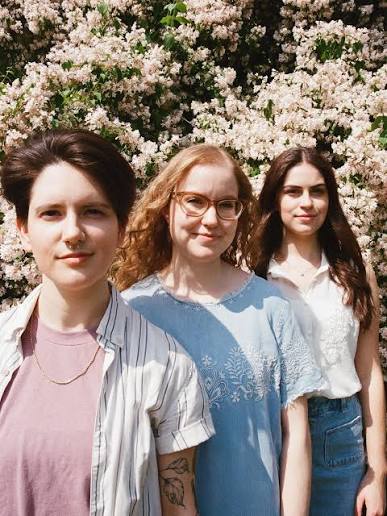
The Indie Distributor: Nice. I noticed there’s a heavy presence on YouTube, which is great. Well over 1,000 subscribers on YouTube, which is marvellous. Was it a conscious choice to lean into YouTube as a platform rather than some of the other social media platforms?
Alyssa Tess: Well, I think it possibly started, again, with us thinking we were going to be a wedding band. We knew when we created all our socials that there were a few platforms we definitely wanted to do, and YouTube was one of them. And then I think what really kickstarted it there for us was we posted a cover of a Gregory Alan Isakov tune.
The Indie Distributor: “San Luis,” isn’t it?
Alyssa Tess: Yes, “San Luis.” And people loved it. And again, we were a brand new band, and we were like, “Okay, cool.”
The Indie Distributor: By the way, I like your version better. I gotta say, sorry, but the harmonies and just the whole mood of it… Of course, I may be biased, because I heard you perform it at Gussapolooza, and it really stuck out for me. I didn’t realize it was a cover. Nothing against the original, I just do prefer yours.
Alyssa Tess: Well, thank you. But yeah, I think that cover song taking off kind of solidified for us that we want to make sure we’re keeping up our YouTube.
Becky Leigh: [We got a] pretty big following just from that one video. Like, we gotta keep it up.
Alyssa Tess: And especially this past year, 2026… Yeah, what year are we? That was one of our goals: we wanted to get back to being consistent with our YouTube. So we’ve tried to post a cover almost every month or two on there, and it’s good to keep us fresh and keep that going as well.
The Indie Distributor: Absolutely. So what makes you decide on a cover song to do? Is it a unanimous decision, or will one of you bring it in, like, “Hey, you have to check this out”?
Brittany Iwanciwski: It’s kind of both, really. Truly.
Becky Leigh: It kind of depends. We were going with Canadian artists at one point. That was a big thing.
Alyssa Tess: Covering Canadian artists, yeah.
Becky Leigh: The Charlotte Cardin tune, which has some French in it. We were like, oh, because I’m from Quebec, so I speak French. That was another thing: it would be cool to incorporate a little bit of that. The first one, “San Luis,” was one that I brought to the group. It’s really been whatever we’re feeling. [Some of them] have kind of been Alyssa[‘s] that are not up yet. We have some new covers that are coming.
Alyssa Tess: I always say we like to folkify a song. So I always think it’s fun when we pick a song that maybe leans more pop, and then we turn it into our folk version of it.
The Indie Distributor: So you folk around with it?
Alyssa Tess: Folk around, yes! I’m gonna say that.
The Indie Distributor: I’m sure that joke’s never been used before.
Alyssa Tess: That’s so good.
The Indie Distributor: Oh my. Make it your own, is what we say.
Alyssa Tess: Yes, yes.
How to Release a Cover (and Where the Money Actually Is)
The Indie Distributor: That’s great. I was curious, too, to get a little technical about the limitations or the process for releasing a cover song on Spotify, and if that’s something you had done through a distributor like DistroKid, or whatever distributor platform you use. Just so other people can learn from that experience.
Alyssa Tess: Yeah, for sure. If I remember correctly, you can post a cover on streaming platforms as long as you have the permission. So you basically… the word is escaping me, but you pay for the rights. Is that copyrights? You pay for the copyright to be able to perform the song. I believe we got it through Connect licensing. If I remember correctly, I think Connect. You pay a fee. It wasn’t much.
Brittany Iwanciwski: You have to say, “I think we’ll sell this many downloads.” So you say, “Okay, we’ll sell 10 downloads,” or “We’ll sell 50 downloads,” and then you pay.
The Indie Distributor: Okay, interesting.
Alyssa Tess: It’s not much. And then the distributing platform that we use is CD Baby. When you upload to CD Baby, as I’m sure it’s like when you upload to any of the other distributors, they ask, “Is this an original, or is this someone else’s song?” And as soon as you select that, they tell you all the info you need. Just upload the proof that you’ve got permission to use the song, and then you’re good to go. We don’t see any money from it because it’s a cover. But…
The Indie Distributor: Wait, but you see money from your originals?
Alyssa Tess: No! I was like, well, we see some cents. Radio play. Yeah, radio is where it’s at. If anyone is wondering: radio.
The Indie Distributor: Ah, so then do a bit of a plug. Which stations can we expect to hear Wild Bloom on?
Becky Leigh: We also just passed on a couple. Do you remember what they were?
Alyssa Tess: College radio stations, yeah. Amazing college radio stations. I’m a huge supporter of CBC Radio, and CBC is a huge supporter of indie musicians as well, so that’s a big one. Going back to college radio stations, an easy one, if anyone has gone to school somewhere, is to see if your post-secondary school has a radio station, because they will probably play you. So that’s part of it too.
Becky Leigh: I have the stations. We were played in Kamloops, Winnipeg, Ottawa.
Alyssa Tess: We’ve been played on a station in Buffalo as well, called The Bridge. It takes some scouring, but sometimes with these smaller stations, you can just email and say, “I have a new song.” We use a site that you found called Earshot as well. That helps get you connected to stations too.
The Indie Distributor: Great advice. Earshot is something that we’ve also submitted to with my band, but a lot of indie musicians actually don’t know that’s an option, and may have questions about posting a cover. So thank you for answering that.
Into the Studio with Nathan Jackson
The Indie Distributor: You may not be able to speak very much about this, because it’s top secret, but what singles, what album? Are you going to be compiling and releasing an album at some point, or is it in the works?
Alyssa Tess: Yes. That’s the next goal for us.
The Indie Distributor: Right on.
Alyssa Tess: The producer we worked with on “Rising Ground,” his name is Nathan Jackson. He’s phenomenal, and we really enjoyed working with him on “Rising Ground,” and we felt like he really got our vision. So the plan is to continue working with him. We’ve got some dates lined up. We’re hitting the studio this winter. So hopefully more music in 2027.
The Indie Distributor: Love that. So how did you find working with a producer, rather than self-producing or negotiating your own tempo when it comes to creating in the studio?
Brittany Iwanciwski: I’d say [with “Rising] Ground,” we had a lot of the tracks already done. All the vocals, the instruments. And then we brought it to Nathan, and we’re like, “We just want something a little bit more produced, some other cool sounds.” And then he’s like, “Like this?” And then we’re like, “Oh, amazing!”
Becky Leigh: I feel like we kind of got to a point where we had been playing the song for too long, and too many times. It’s hard to envision what exactly we want. We know we want something else on it, but we just can’t figure out what that is. And so it was really nice to have an outside perspective. Nathan was really great going through different sounds with us and pinpointing what exactly we wanted, because again, we kind of had a vision, but we didn’t know how to really execute it the way we wanted. So that was really nice to have, on the producer side.
Alyssa Tess: Yeah, and obviously anyone can self-produce nowadays. Anyone can buy a DAW and record themselves, and we did try that. But I would say that it’s none of our strong suits necessarily. Actually doing the recording process, being your own engineer, is not necessarily our strong suit. And so trying to do both just wasn’t helping our creative process. It’s nice to have that third-party person who can also give us some perspective on what they hear when they hear our song, but then also do all the computer stuff for us, so that we just get to make the music and have creative say.
The Indie Distributor: Totally makes sense. There’s a reason why these people are amazing at their jobs, and it allows you the creative process. So you mentioned there was input on the production aspect of it. Has that informed the way you’re writing your new material?
Becky Leigh: It’s a good question. I feel like yes and no. I feel like in our minds we sort of know instrumentation-wise, but there’s always a little, “Oh, what if we want to add a little sparkle here?” And we don’t necessarily know what that is, and it’s kind of nice to just go in with Nathan and be like, “Let’s just try a couple different things.” But at the same point, I think we also know our base instruments. We kind of know instrumentally what we’re looking for on most of them. But also leaving space for creativity in the studio is nice.
Alyssa Tess: I will say, I feel like with “Rising Ground,” we leaned into more of an alternative folk sort of genre approach with it, and I almost feel like we’re entering a new phase of our band, where we’re like, maybe this is how we want to lean a little bit as we continue to release our music. So that’s potentially something that’s evolved out of it too: really honing in on what our sound is when it’s more than just the three of us playing live.
The Indie Distributor: I think that’s really commendable for you to identify that, because as you started out, here’s the direction, and then it’s like, well, you know what, we’re not just a wedding band. We are actually an extremely talented set of writers and performers. I’m always interested in the evolution of the group. And alt folk, I think that’s an interesting category. I don’t know if there are other bands that fit in there, but it might be a cool exercise, because someone’s inevitably going to ask, “Well, what do you sound like?” or “Who do you project yourself as?” And to have some people to list…
Brittany Iwanciwski: [We’ve] played with a lot of people I would categorize as alt folk. Fish in a Birdcage is one.
The Indie Distributor: Okay.
Brittany Iwanciwski: He plays cello, so there’s the cello on it. We were kind of thinking about maybe asking him to be on the “Rising Ground” track, but… too complicated. And then he has, I don’t know, the violin kind of going crazy in there.
The Indie Distributor: Nice. As you establish the sound, I think it’s really neat to expand that into working relationships with other musicians and collaborations.
Bringing It Home to Barrie
The Indie Distributor: So tell us a little bit about what’s coming up. I think it’s the Five Points Theatre with the City of Barrie and Underscored Sound. Is that your next show, or is there something happening before that?
Alyssa Tess: Yeah, that’s our next gig.
Becky Leigh: In a few days. Yeah, coming right up.
Alyssa Tess: So yeah, it’s at the Five Points Theatre in Barrie. We’re stoked about it, but I feel especially stoked about it because Barrie is close to where I grew up. So whenever I get to [bring these] guys to my hometown, it feels super special. We connected with Underscored at Gussapolooza. We’ve worked with them a few times since then, so that’s been a really awesome connection. And we were so excited that when they got this opportunity, they reached out to us right away, and we were like, “Of course, yeah.” It’s going to be a great night. There’s three of us on the bill. It’s going to be folky, it’s going to be country, it’s going to be songs and stories. Looking forward to it.
Alyssa Tess: And we’re doing some new material at this show too. I think we have a new original song that’s never been played before, and we’re doing a new cover of a Canadian artist. It’s gonna be fun.
What Success Looks Like
The Indie Distributor: I wanted to ask an open-ended, aerial-view question. Now that things have progressed along, and you’re finding your sound, and you’re finding the place where you belong: what does success look like for Wild Bloom?
Brittany Iwanciwski: I mean, my dream would be we do two tours a year. One tour in Canada, one tour international somewhere. Happy with that. And a record every couple years. That would be perfect for me. But what do you guys think?
Becky Leigh: I was gonna say, if we could just play, if that could just be what we do, then I’d be happy. You know, playing festivals, touring, whatever it is. Just being able to do that full time would be sweet.
Alyssa Tess: Yeah. And I guess, for me to piggyback on it, success would feel like being able to just keep doing this, because it already feels like we’ve got some success going. Every year we get a few more invitations to play something, a new opportunity that we didn’t have the year before. Just being able to keep doing the thing together is good. Let’s keep doing it.
The Indie Distributor: I love that, because at no point in any of the three responses was it focused on anything having to do with numbers or metrics. I heard a great speaker at the Music Pro Summit. A chap named Darryl Hurs runs it. He does Indie Week, which you probably know. One of the speakers was talking about your solar system: the artist is the star, literally, and the orbiting planets become the sources of revenue and the different aspects of what’s in your orbit as an artist. And he was saying streaming is a far distant moon orbiting Pluto, that type of comparison, just because we can’t expect actual revenue as artists from that. It’s more of a promotional play. And there are other things we have access to now as artists, like merch, Patreon, et cetera. So, getting businessy here, do you have some of those initiatives in place that allow you to at least compile some revenue from what you’re building?
Brittany Iwanciwski: Let me grab our t-shirt.
Alyssa Tess: We actually have t-shirts.
Becky Leigh: Starting with merch. We got merch.
The Indie Distributor: Oh, you actually have some too. That’s great.
Alyssa Tess: Right here in the living [room]. We want to show it off. Merch was a big one for us. We’re very proud of these shirts that we will show you. But one of our first merch endeavours that I’m very proud of is that we made little grow-your-own wildflower kits.
The Indie Distributor: Yes, I think I have one of those.
Alyssa Tess: Oh yeah. And this is our shirt.
The Indie Distributor: Excellent.
Brittany Iwanciwski: A wildflower from each of our home provinces.
The Indie Distributor: Oh, that’s such a great idea.
Alyssa Tess: Yeah. So that’s part of it. I feel like maybe it’s debatable. People are saying live shows are struggling right now, but live performances are a big part of what we do as well. And we’re very lucky to have been getting a lot of opportunities that we don’t want to say no to. So that’s part of it for us as well.
The Indie Distributor: That’s amazing. And is the plan ultimately to get to the point where you’re performing mostly originals with the odd cover? Or is that the way it’s positioned now? Because I think when I saw you, there was maybe an 80/20 split.
Alyssa Tess: Yeah, I think originals are really important to us, but we like to throw in a cover, because people like to hear what they know. So we always try to make sure that it’s mostly originals with covers thrown in. But of course, it depends on what gig we’re playing.
Becky Leigh: If it’s a city gig where they’re like, “Play all covers,” that’s obviously something different. But yeah, mostly originals.
Alyssa Tess: Yes. And then the covers that we do play are ones that we’ve made sound like us now, so [it’s our] spin on it too.
The Indie Distributor: That’s excellent, because then it doesn’t feel like you’re having to play it. It’s more of a conscious choice, seemingly, because it really fits your…
Alyssa Tess: Yeah, we [folkify] them.
Advice for the Next Wave
The Indie Distributor: Nice. So what advice would you have for younger artists that are coming into the fold, since you’ve established a niche and are going for it here?
Brittany Iwanciwski: I love that question. Hmm. I would say write, record.
Becky Leigh: Yeah. Just find what you want to do. Whether that’s doing originals, writing originals. I mean, I know for some people it is the wedding thing. You know, we thought we were going that direction. But just kind of dig in and keep going with it. If that’s what you want to do, just keep going. Honestly, I feel like for us too, we’re just like, let’s keep going, just keep going. Next thing, you know. And I mean, we love it, so it’s easier. But yeah, just keep going.
Alyssa Tess: I’ve always found, too, don’t be afraid to ask other people how to do it. How do you get that gig? How do you get radio play? How do you post a cover song on streaming platforms? Because that was a big thing for me as a young person. I wanted to play gigs at coffee shops and bars or whatever. I didn’t know how. And so you just ask, or look for an email and then ask if you can play there. [Don’t] be afraid to just shoot your shot, because then you’ll learn.
Becky Leigh: That was a lot of my first gigs at Humber. I used to talk about this with my vocal teacher and be like, “How do I get gigs?” And she’d be like, “Here’s the email for this venue, here’s the email for this venue. Just email, you know, just see if you can.” So yeah, I agree with that a lot, actually.
Brittany Iwanciwski: Yeah, I would say finding your community. For us, it’s nice. It has a built-in community. Originally, I feel like maybe we each had our solo projects and we would work on that together. But now it’s nice: we have our one project that we work on all together. It’s important to have those fellow musicians around you.
The Indie Distributor: I find that in a lot of cases, it’s always who you know, and everybody says that. But there’s so much truth to it, in that it’s not just introducing yourself, but also being interested in what projects they have going on. Because at the end of the day, we are all people trying to make things happen. Whether you’re a venue owner, or you’re working on your own educational initiative, or you’re creating a festival, or whatever that is, these are people. In most cases, anyway. There are exceptions that are massive conglomerate organizations, but we won’t talk about them right now. But really, if you’re genuinely interested in how you can help these people that are trying to build something, they will take an interest in you, and vice versa. You just see how you can promote one another’s initiatives and grow together.
Alyssa Tess: Yeah, for sure. That’s huge. Supporting your fellow musicians. And then I feel like educating people who aren’t musicians as well, to support indie musicians too. It’s not overrated. We need your Instagram [shares]. We need you to share it. That’s a huge help.
The Indie Distributor: Yeah, and I find that now more than ever, because there’s this huge shift seemingly happening. Not to get political, but there’s a lot going on on the front of shifting into tech and defence, and lots of resources being pushed over there. But the arts can’t fall behind. So the more we can do to establish one another’s communities and really share insight and information, I think it’s going to benefit everybody. Another TED Talk that my wife and I were watching mentioned that giving your attention to art is a rebellious act, which really resonated with me.
Alyssa Tess: Yeah.
The Indie Distributor: So, great. Well, thank you all three for joining tonight and for talking about your projects that are coming up. Really excited for what’s going on, and happy to see you getting so many great opportunities. We’ll definitely get the word out as we can about any initiatives you’ve got going on, and I’m really excited to see what happens with the new album that’s coming. We won’t say anything if you don’t want us to, but that’s exciting.
Alyssa Tess: No, it’s good. It holds us accountable. We love it.
The Indie Distributor: So next week they’re coming out with a new album, and… joke… it’s going to be called Folkin’ Around.
Becky Leigh: I actually love it. Maybe we’ll give you credits.
Alyssa Tess: We’ll give you credits. We promise.
The Indie Distributor: Oh yeah, that’s a freebie. You can have that one. All right. Well, thank you again for joining. It’s great to see you all, and hopefully we’ll be able to see you down the line at a gig, or at Gussapolooza, or another event.
Alyssa Tess: Yeah, thank you so much for having us. This was so fun.