
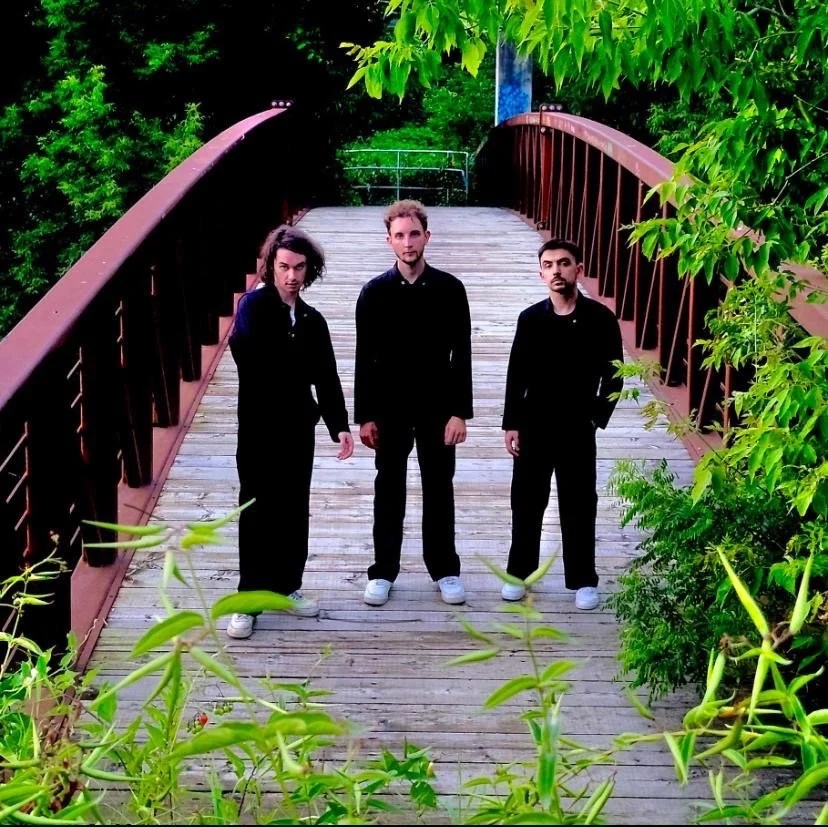
Black Paint walk on stage without a setlist. No click track, no in ears, no idea what the next song will be until one of them shouts it out. The Ajax three piece, made up of Tyler, Eric and Stephen, have been playing together since high school, first as Obsolete and then, from January 2020, under the name that stuck.
Their debut show landed days before the world shut down for COVID. Six years later they finally have a debut album, built from songs that changed shape night after night on stage, sharpened in the studio with producer Brian Moncarz, and road tested everywhere from Oshawa rooms to their first Gussapalooza. In this conversation they talk about improvisation as a principle, the surprising value of shortening your intros, why the grocery bag full of guitar pedals is still making it to gigs, and the community that keeps a band alive.
The Indie Distributor: I am joined today by Tyler and Eric from Black Paint, an exceptional band out of Ajax who are tearing up the Toronto music scene. They were just performing at Gussapalooza, which is where I got the opportunity to see them live on the secondary stage. That actually ended up working out better, in my opinion, because it was a little closer, so I got a chance to see the performance in a more intimate way. You guys did not disappoint. It was a fantastic show, so thank you so much for joining the program today.
Tyler: Thank you. How’d you like Gussa?
The Indie Distributor: It was amazing. I always have a lot of fun there. I’m in a band called Shoemaker Levee and we’ve played there a couple of times. It’s always a great time, a fantastic vibe, and everybody’s really supportive of one another. I can’t say enough great things about that festival. They’re on to something really great.
Tyler: That was our debut performance there. We had no clue what to expect, but it’s the real deal. Like you said, it’s huge, and it’s such a community. It was so nice to be part of it. Stephen had a wedding the next day, but even being part of the whole Friday up until the bonfire and everything like that was the real deal. Something special.
The Indie Distributor: I totally agree. It’s still kind of the best kept secret for independent musicians, because there are a lot of folks that still don’t know it exists, and as soon as they get there and realize what’s going on, their minds are blown. It’s great that you guys had an opportunity to be there and to perform. I usually always start out with, how did things get going? I think a couple of you went to kindergarten together.
Tyler: Since JK. At the smallest little 23 person elementary school. But even our high school was small, and that’s how we met Eric.
Eric: In the very, very early days, before I joined, because I’m two years younger than Stephen and Tyler, we kind of found out about each other through our guitar teacher, me and Tyler. His name was Tony, and at one point during my lessons he was like, “Hey, there’s this guy named Tyler and he wants to form a band and he needs a drummer.” Then they found a drummer, and then that drummer graduated from high school because he was a year older, and I was in high school at that point. So then they asked me, finally.
Tyler: Long story short, high school.
The Indie Distributor: So since high school you’ve been making music as a three piece, or were there different iterations of the band?
Tyler: Back in high school we played as a five to six piece. If you count the music teacher, we had a lot of people. We would put people through a lot of weird music in the little coffee houses they’d do for the school. Our first performance with Eric, he should have known what he was getting himself into. Me and Stephen were like, “Okay, we’re playing Paranoid Android by Radiohead. You got it?” And we practised and practised, and we did a good job, but it was in a little coffee house where people wanted to hear acoustic guitars. And here we are with Paranoid Android.
The Indie Distributor: That’s not a normal selection. Coffee house aside, that’s an ambitious cover.
Tyler: We’ve always had a little bit of unapologeticness to what we want to play, which is good in a way. If we liked something, a tone or a heavy riff, we’re going that route no matter what, even if it’s nowhere close to radio or ear friendly.
The Indie Distributor: Sticking to your principles in that regard, which is great. You started releasing music in 2022, at least as far as the trail goes on Spotify. How many years have you been a band?
Tyler: A good decade. Black Paint as an entity, since COVID. We pretty much started January 11th. That’s the day of the first show, and then all of a sudden COVID happened and we’re like, “Well, that’s a good start to everything.” But as a band we’ve been playing since, what, 2016?
Eric: Yeah. Before we were Black Paint we went by Obsolete. That started late 2016, early 2017. Like Tyler said, Black Paint started 2020.
The Indie Distributor: There were a lot of things that culminated around that silly pandemic. We ended up releasing our first full length album in February of 2020.
Tyler: Oh wow. Everyone was like, “Let’s give 2020 a shot.” New decade, new beginning, and then just got kicked right in the nuts.
The Indie Distributor: You’ve released singles since then, and now you’re releasing your full length album. Is that a culmination of the singles you’ve released so far as well as some new material, or can you say?
Eric: There are two songs on the album where we’ve released earlier versions but we re-recorded them. Born Again and The Lesson, two songs we re-recorded and put on the album. The album also includes songs that we’ve released since 2024, so songs like All Bad, Pesticide, Right Down the Middle, Crash Landing, our new song Falling Victim which comes out tomorrow, and then the rest are songs we played live and some songs we haven’t played live. So it’s our best songs from the last six years.
Tyler: We re-recorded just a couple of them. Some of the singles from 2022 fell by the wayside, but a couple of them we re-recorded because we felt like we didn’t really have them proper, how we wanted them to sound. We had a whole little debut album we were going to drop with those 2022 songs, and then COVID happened, and whatever happened with those, we just wanted a fresh start. And playing live, especially the past couple of years, we’ve been playing live a lot more than previous years. The songs completely change, because all of our sets are improvised. Songs that begin one way, all of a sudden one show will find something. We also have a guy that records every set, so we can see some of these little improv moments that we really like, and after a year of playing the song we see that, oh wow, pieced together it makes what we kind of would want it to sound like, almost perfect in our ears.
Eric: With our song The Lesson, we bring the volume right down near the end of the song. On the version we have now on streaming services we don’t have that part, but just through playing live that’s a part that came naturally, and we’re like, “That’s really cool.” Even with Born Again, we shortened the intro and extended the outro slightly and changed things up here and there, to the point where, even with the newer songs we recorded, it feels like we finally have a collection of songs that is right for a debut album. Whereas before, it felt like we just had songs for the sake of songs, in a way.
Tyler: Not to make this answer so long, but the last bit of that is, with the old songs there was a guy that said, “Let’s record you,” and it was our first time being in a real studio and stuff, so we just jumped. In a week we had the songs we wanted to record and everything together. That’s why I think this debut album finally took, what, six years, because of the live shows perfecting them, and just grinding it out. We’ve finally figured out what we would want to be an entity of Black Paint. It goes back to the debut. Every artist I’ve ever liked, I’m like, “Okay, but what were they doing at the start?”
The Indie Distributor: That’s a really interesting way to go about it, because artists these days are releasing singles as a reality of dealing with streaming services. That’s the expectation, that you have to waterfall it and build up the anticipation and constantly be releasing content. But I like the way that you’ve gone about it, because when you’re playing live a lot, you adapt certain aspects of the song and it takes on a life of its own. If you’re able to adopt that into the studio version, that’s a different release, and it gives you so much more flexibility. Are you going to leave the prior versions of the songs still accessible?
Tyler: Yeah, they’re just demos now. I don’t know if we’ll put demo on them, but there’ll be another version that people can listen to if they feel like it. It’s going to get buried eventually once we keep releasing. It’ll be a little Easter egg that people can be like, “Oh, that’s cool.”
The Indie Distributor: I dig that a lot. I think that’s very cool. I noticed that for the track you released recently, Pesticide, you had Brian Moncarz working as a producer. How did that conversation with him come about?
Tyler: He just saw us at a show. We played a show in Oshawa at The Atria. He was in the audience and he was like, “You know, I love your sound, I want to record you guys.” It was as simple as that.
Eric: With Pesticide in particular, we knew we were going to record four songs with Brian. We had another song that we were thinking of possibly recording, but then we also sent Brian a little guitar riff that Stephen was working on, and Stephen was like, “This isn’t really finished, but what do you think?” And Brian was like, “I like that, keep working on it.” And within, what, two days, the song was just written.
Tyler: It wasn’t even a guitar riff that Stephen made. We made that within a couple of seconds in the studio, because when we practise, we don’t practise properly. We just jam for 40 minutes or whatever and then see if anything comes. I think Pesticide was literally just Stephen starting a jam riff, and we hopped on it quick and it just made sense. That song in particular was a very spontaneous thing. Whereas with Born Again, that was a song we’ve had for years, so we re-recorded that with them, like other songs we had for a while. But that song was very spontaneous.
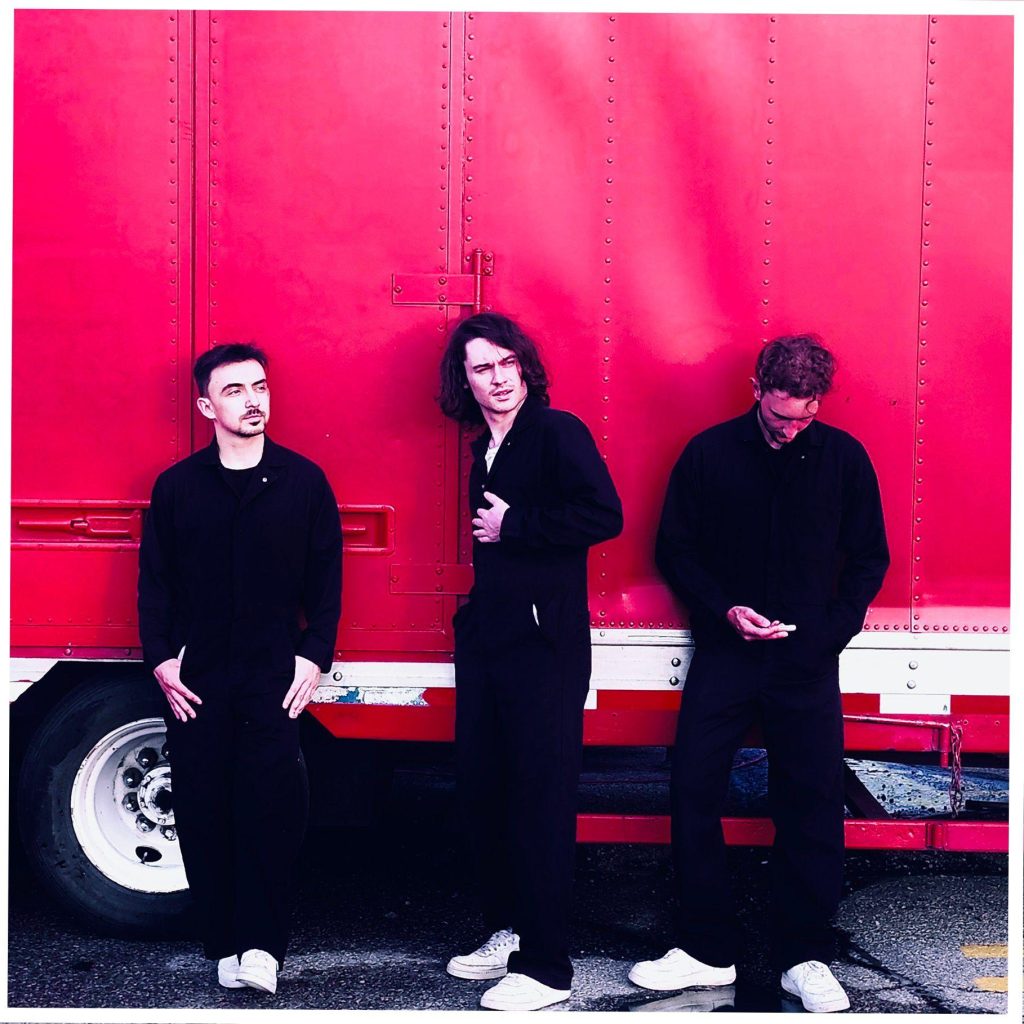
The Indie Distributor: What did you find the process was like? We know Brian, he’s a great guy, but working with a producer, and that dynamic, versus when you were working on the material yourselves as a three piece.
Tyler: It was nice. Brian is the sickest dude to be in a room with. It’s a good vibe at all times. It was also nice going into his Noble Street Studios, where he works out of. It was very beautiful. Good energy, good connections with him. It was nice to have a bit of a head on our shoulders, if that’s the right word, because sometimes we’re a little bit, like I said, we improv pretty much everything. So we have a piece of what’s going on, what we think is the track. And with Born Again, we’ve had that structure for the most part for years and we’ve been playing it that way, and then all of a sudden he’s like, “Shorten that, shorten the intro a bit.” Why not? It was one of those moments where you take a step back and you’re like, “Yeah, I guess we should just shorten it.” It made it so much better for what we recorded with them. Little stuff like that, he would produce in a way that still let us come up with what needed to happen, but he’d give a little bit of a nudge. “Hey, what about this thing?” And we’re like, “Why didn’t we think of that sooner?”
The Indie Distributor: That’s the mark of a great producer, being able to let you experiment but at the same time point out, in a delicate manner, that the song would probably benefit from this or that.
Tyler: Born Again is wicked on the new version of it. That’s a big thing we learned from Brian. We have very long intros, we realized. Once he brought it up, almost every song he was like, “Shorten the intro, shorten the intro,” and he’s right. It makes the song much better, especially with Born Again. Now we actually think of that when we’re doing any track. Some intros we obviously like long, because it’s more of a magnum opus of some sort, but a lot of them, we were like, “Okay, does this actually have to be that long, or are we just driving our egos?”
The Indie Distributor: It’s a forest from the trees thing, right? You fall in love with what you’ve done, but then you’re doing it for the value of yourselves instead of testing it out with audiences. And live is such a big part of your DNA as a band, so it’s really helpful to have that input, because if it is too long, the crowd’s going to let you know.
Tyler: Exactly. That’s why live is so important for us. A lot of tracks we’ve made the day of, and we’re like, “Okay, let’s test that out tonight.” And easily, right then and there, we’re like, “Okay, well, that part’s obviously not going to work.”
The Indie Distributor: A detail question, but for the album photography and such, you mentioned there’s someone that records your sets. Do you have people that you work with that take the photography and help out in that regard?
Tyler: Yeah. There are photographers we’ve pretty much only ever worked with. There are so many in Toronto that are so skilled at what they do. Every time, they’ve just given us consistent results and it’s always impeccable.
Eric: Our video guy Ethan is basically our manager in a way. He helps us out, gives us so many tips, like, “Hey, I think you guys maybe should do this and look into this.” He’s a very close friend of ours and we’re very grateful to have him, and his girlfriend Katrina as well. She takes photographs for us, comes to all of our shows, and they’re both the most supportive fans that we have. There’s so much stuff you wouldn’t think about. Even setlist.fm, where you can see a band’s setlist, Ethan just makes sure that after he films us that night, he puts the setlist on setlist.fm. It pays off, because sometimes I want to see what we did and I’m like, “Oh, it’s there, cool.” There are so many little background things that we wouldn’t have even thought about, or necessarily taken the time to do, but it’s so essential to have. They’re the most support we get.
The Indie Distributor: That’s amazing. It’s so helpful to have a community centred around what you’re building.
Tyler: It’s pretty much essential. It’s essential to have your team. Going off of them again, they do it just because they care about the vision as much as we do, and it’s so nice to have that.
The Indie Distributor: I love hearing that, and I think that’s something a lot of bands want to strive for. On that note, knowing that you’ve been at it for 10 years, I guess steady…
Tyler: Actually caring and trying since 2020, I guess. Black Paint is the “okay, let’s actually try something” and try making this what we can make it.
The Indie Distributor: Well, that’s six years. It’s not a small amount of time. It’s getting on to the better part of a decade. So what advice would you have for up and coming artists that are breaking into the scene and trying to make something go with it?
Tyler: I think the biggest part is kind of what Gussapalooza is all about. It’s all about connections and networking with everyone, whether it’s your genre or not. The whole industry is based around knowing people and talking with people, and not even for your own self, just caring about indie music and the scene in general. It thrives when people care. Sometimes it’s hard in Toronto, because especially nowadays you can sense people are a little bit more doing it for themselves. Not everyone, but the people we’ve surrounded ourselves with, we find we’ve garnered a good amount of community in our areas of it. You need to be part of the scene because that’s what you love doing and that’s what you care about, and like I said, it thrives because you’re all pushing each other up.
The Indie Distributor: I love that. What do you think, Eric?
Eric: I was pretty much going to say the very same thing. Community. Talk to people after shows. That’s something we’ve been trying to work on the last little while and be more conscious of, just talking to people, even random fans that come to the show, even if it’s the first time seeing them, just going up and talking to them. Another thing I’d say that’s important for bands to do is to do it with people you care about, and to not compromise your vision. Just do what you feel is right. Don’t try and chase success. Obviously success is different for everyone, but don’t just do it for the fame or for the money, because you’ll probably be disappointed, especially in the money aspect. Especially making music, just do what you feel is right and stick to that as much as possible.
Tyler: Stick to it. The amount of times people are like, “You guys should get a pedalboard, you guys should get in ears, you guys should get something to put…” Stephen comes with his Sobeys bag. It’s one of those t-shirt bags that you buy, and that’s where his pedals are. Up until two years ago, me and him shared a SNARK tuner, the clip-on ones, just because we thought it was funny. We like our little quirks. And even our improv, no setlists ever type of vision that we have for this band, which we started this podcast with, we support that wholeheartedly. We will never back away from it, even if it’s a big Budweiser Stage show. The lighting people are probably going to hate us, because we’re like, “We don’t know what we’re going to play next and we don’t know where it’s going to go.” But that’s just what we want to do, and like you said, it’s for the love of what we want to do. You get more fulfillment out of that, and people tend to notice, I think. So if people tell you to get a pedalboard, don’t get it. Go to Sobeys, you’ll get a 33 cent bag.
The Indie Distributor: And SNARK tuners are definitely handy. It’s a fine line, I find, because in some cases, if it’s becoming a hindrance, if it’s a hurdle and you’re finding that whatever that is is causing issues with either the sound person or some of the production aspects, then you might consider it. But what it sounds like to me, and from what I saw, the live show is building. There’s momentum building in the way that you have pieced it together, because you can tell the difference between a band that isn’t really comfortable up there and a band that is. I certainly did not get the sense of you guys being uncomfortable on the stage. In the set that I saw, the transitions were fast. Even if you didn’t know what the setlist was going to be, whatever the communication was in between, the transitions were pretty seamless. That might be working for you instead of against you, in terms of some of the decisions you’ve made.
Tyler: It’s also just, I feel like what brings people’s eyes on us is that it could fall apart any minute. We have no clue where it’s going. Thank you for saying all that, that’s good that it comes across like that, because sometimes when a song’s ending, all it takes is me or Stephen or Eric just yelling out a track. We’re all watching the audience, seeing what’s working, and we’re all just seeing what’s working with us. Most of the time it’s one of us just yelling, “This is the next track, probably,” and then whoever starts, starts. It always seems to be so close to falling apart, but it doesn’t, which is good. I don’t know if that’s just musicianship or what, but I’ve fallen into Eric’s drum kit more than I could ever admit.
Eric: You fall into my drum kit every single show, no matter how big the stage is.
Tyler: That’s not every single show. But it’s just because we’re in it together. We tend to be very good at falling into the music, and me falling into the drum kit, because I play with my eyes closed a good amount of the time. I’m feeling where we’re going and I let it take me, so sometimes that really messes with us.
The Indie Distributor: I like the concept of that, what you were saying about being sort of unrehearsed. No wonder you don’t have a setlist afterwards, because it sounds like it’s something that’s made up on the spot. But we can all identify with that not being the optimal thing for every band.
Tyler: Not at all. That’s just how we do it, that’s just our vibe and the way that the band works. What I think draws people to us is that it’s so chaotic, and if we don’t know what the next step is, it keeps the audience entertained in the way of, yeah, we don’t know either what’s going to happen. But on the flip side, you can create really amazing climaxes and full atmospheres with in-ears, with everything all dialled in. We will never have it good with lighting people. We need to have a guy that knows the tracks and can watch us with our little subtleties, eventually, because it’s a lot more work for them, and we might not be able to have things that other people would if they had click tracks and all that stuff. That’s how we like it. It’s not to say that’s any better, it’s just what we feel connects us to the music and the spiritual side of it all.
The Indie Distributor: I admire that. As an artist I admire that, because it’s not easy to do. Not every artist can work with the possibility that the train’s going to roll off the tracks at any moment. I really dig that. So obviously the album’s coming out, and you’ve got a show coming up mid September, which is an all ages event. What else is going on coming up?
Tyler: The only show we have announced at the moment is September 19th in Oshawa, Convergence Music and Arts Fest. That’s all we have announced for now, and then we have some other shows for the end of the year and coming into the next year that we’re going to be announcing relatively soon, so I can’t really say much about it.
The Indie Distributor: That’s totally understandable, and you’re dropping an album, so that’s really what’s next on the list. Thank you very much for taking some time and chatting. I’m really excited to see what you guys do, because, as I say, I was blown away by your set. I’d love to see you again at some point.
Tyler: That would be sick.
The Indie Distributor: Thank you so much, Tyler and Eric. It’s great to meet you, and we’ll talk to you soon.
Tyler: Thanks, take care.