
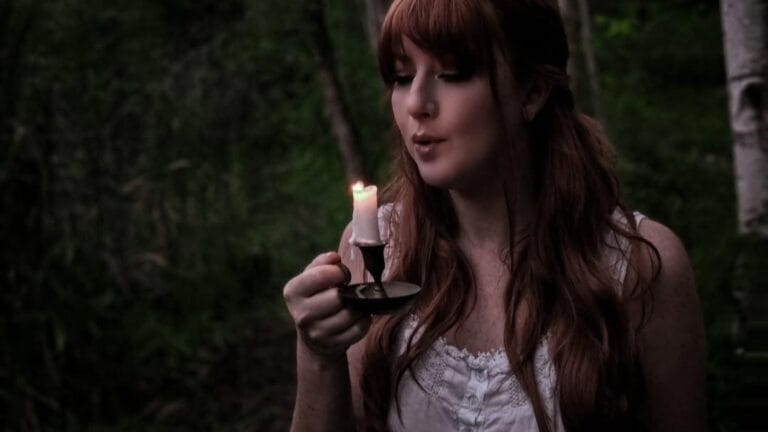
Kailan McGee released her debut album with twenty-one songs on it, which is roughly twenty more than the current playbook says an independent artist should attempt. She followed it with Lady of the Moon, a fully imagined concept record that arrived on the Pink Moon of April 1st and required seventy pages of handwritten notes to build: characters, poetry, landscapes, lore. She has already written the album after that one. She is painting the artwork for it, song by song, and it is about the Minotaur.
None of this is how you are supposed to do it in 2026. That appears to be the point.
The Cobourg, Ontario songwriter came up through church choirs and her grandmother’s example before discovering that she did not have to sing other people’s songs, and she has been writing ever since with what she describes as a waterfall effect she cannot shut off. In conversation she is generous, funny, and completely unbothered by the metrics conversation that keeps so many independent artists awake at night. She talks about pen and paper as therapy, about David Bowie’s advice to get so far out that your feet cannot touch the bottom, and about the quiet defiance of making a record that asks an hour of someone’s attention in a world calibrated to thirteen seconds.
We sat down with Kailan McGee to talk about world building, the cost of content, the pendulum swing away from AI, and why she thinks it is punk rock not to care how many listeners you have.
Origins: Choirs, Cobourg, and a Later Realization
The Indie Distributor: The first question I normally ask is about your origin story, how things got started. So take us a little bit back in time, to how you got into the music industry and where things started off.
Kailan McGee: I’d say for me music has always been such a big part of my life. My grandmother was a singer as well, and I feel like at such an early age I was a part of their church group choirs and things like that. So I was introduced quite early on in my life. And as life carried on, I just sort of realized that singing was what brought me the most peace. I’m from Cobourg, Ontario, and I joined a few prestigious type choirs there. And it wasn’t until kind of later in life that I realized, hey, I can be the one who writes the music too. I don’t just have to sing other people’s music. I can write it too. So that was kind of a later realization, but I have not looked back since I started.
The Indie Distributor: It’s hard to stop once you get into it, for sure. Good for you. That’s excellent. I admire you wholeheartedly for putting together twenty-one songs as your debut album, because I’m an album fan. I mean, you did release the “Long Live the Night” single. But what has changed in your process between that release and what you’re looking at now for how you approach creating your material?
From Lived Experience to Pure Imagination
Kailan McGee: So for my debut album, the twenty-one songs, it was quite expansive. This entire album sort of was drawing on personal experience, and I kind of experienced like a waterfall effect type thing where once I started releasing, I couldn’t stop. And I feel like “Long Live the Night” was one of the only kind of fiction-based songs on that entire record. Everything else is about something that has happened to me personally, and drawing on experiences where I have felt any sort of emotion intensely.
And I couldn’t stop with that record. I figured I had more after twenty-one and I was like, no, that’s enough. So between that and my new album that I just released on the Pink Moon on April 1st, that is completely imaginative. That all came from my imagination, and that was a challenge that I wanted to give myself. I feel like as an artist we always kind of have to be pushing ourselves to grow and experiencing what we’re capable of as an artist as well. So this was a pure test to myself, to see.
I always have loved the concept records I’ve come across in my life, too, and I’ve always kind of wanted to try my hand at one. So this was kind of the opportunity for me to experience that. And it was easier than I thought it would be. A lot more notes went into this. I had seventy pages actually of notes for character development and poetry that went into the creation of this album. So it was a lot more developing characters, developing landscapes and lore, and developing a cohesive unit as an album, rather than the first album which, while it was expansive, was also multiformatted. It was kind of all over the place as far as genres go. A lot of people had asked me if that was kind of a strategy for releasing it to be heard on different types of radio, but no, it was not. The songs decided their own genre for that record.
I feel like it’s all a very different sort of experience when you write based on something personal that’s happened to you, and when you really try to pour intensely these emotions that you’re feeling into something that has happened to you, versus okay, now I’m creating this character. I’m creating their emotions. I’m creating this story. And to kind of convey the reality of a character is harder than it sounds.
“The songs decided their own genre for that record.”
– Kailan McGee
How Do You Tell People It’s a Concept Album?
The Indie Distributor: Absolutely. I saw the mind map that you had done, surrounded in papers. My wife’s the same way, needs to surround herself with work sometimes just to immerse in whatever the topic is, and I really like that, because these days we seem sort of more disconnected from the physical creative process of the work. So I found that really refreshing, how you approach that.
I also wanted to ask, when it comes to creating a concept album, and this is something that I’m admittedly selfishly really interested in because I’ve always wanted to write a concept album. When it comes to the format, how you convey that it’s a concept album with today’s means, knowing that you can post a PDF with liner notes and things like that, but how do you get the message across that it’s a concept?
Kailan McGee: That’s a good question. That is something that I haven’t fully put thought into, actually. I feel like I just kind of made it known that it was a concept record to the best of my ability. When we’re pushing ourselves to release these albums, we kind of have to be on the social media presence and pushing it. So I feel like I’ve just kind of made it known.
And also, I feel like anyone who’s listened to the album at this point can probably understand that these characters are fictional and not real. And I mean, concept albums can span from anything. It could be anything. They can even be based on your own personal experience, as long as it’s some sort of cohesive unit where you can create this.
I feel like you really just have to kind of make it known, and in that, I mean, we can’t force people to listen to our music. We can’t force people to understand, and art is subjective. So anyone who listens to it may still be like, no, she probably felt that emotion at some point, and that’s why she was able to intensely pull that character into this. So that is the beauty of art as well, that everyone experiences it so differently.
And I would say if you want to create a concept album and that’s something that really interests you, then just start there. Maybe take that mind map idea. I started with just kind of lists of what are cool names, what are cool old style names, what’s a location, what can I conjure in my mind to be this scenery? How can I make this start as a foundation and build from there? And once you start seeing what you’re capable of and how things come out of you, then you’re able to just lace things together and weave things. And then you can come up with just this interwoven story where there’s overlaps, and you might surprise yourself. All you have to do is start and you’ll surprise yourself.
“All you have to do is start and you’ll surprise yourself.”
– Kailan McGee
Pen to Paper
The Indie Distributor: I think that’s great advice. I also like the fact that what happens with creativity often is you’ll get a spark that will ignite other people around you to be inspired to take their own direction, and by nature of that going on, there’s like this inferno of creativity that ends up hopefully catching on. So I really appreciate that you’ve taken that approach, and specifically with physically writing it down. I find there’s a real beauty in that. Not that there’s anything wrong with writing things down on your laptop or your phone, it’s just the tactile part. It was really interesting to see your creative process in that regard.
Kailan McGee: You can kind of keep it as like a souvenir when you’re done. You can keep all the pages and bind them and then you’re like, this is what I was doing at this time upon the release of this record. And I just find it so much more meaningful to have a physical copy of things. You’re right, there’s absolutely nothing wrong with phone notes. It even saves paper. But for myself, I am very much a pen to paper type of person. And even when I was writing songs drawing on personal experience, that was my form of therapy. Pen to paper, getting it out of you. And then that’s that form of release, in my opinion.
The Case for the Full Album
The Indie Distributor: Since 2024 you’ve released an exceptional amount of music, and a lot of it is in this full album format. Is that something you’re sticking with as your approach? The reason I ask is that there’s a lot of emphasis now around single releases, that that’s the way to properly sequence things out. But I’m again a fan of album releases, and I will be until I pass off this mortal coil. So I’m interested in whether that’s something that you’ve made a conscious decision about, to say no, it’s full statement, full album process from here on through. Because I seem to remember an interview you did recently where you said you’ve got the next album already written.
Kailan McGee: Yes, I do. My next full album is written in full. It’s not yet in production, but it’s fully written. I find that there are no rules anymore. There used to be a specific way that people had to do things and fit into this cookie cutter mold in order to be successful. And the way that Spotify playlists on shuffle go now, the way that music is absorbed in general, people don’t have the patience to sit down and listen to an album. But I am here to try and change that. I can’t get on board with just the waterfall release single idea. I just have too many ideas. I have too much coming out of me, and I don’t enjoy backing a whole single release and all of the effort that it takes to go into a single release. I would rather put that into a creative vision as a whole, as an album.
The Indie Distributor: Interestingly, it kind of asks more of the listener, which is not a bad thing. Even for myself, though I prefer the larger album format, I have less time to do that. But it’s one of those things where you need to commit the time to really take it in for its full expression, its full intent. And I feel like you putting it in that format for your listeners is this sort of establishing of a deeper relationship, because you would prefer to have the statement consumed in its full extent.
Kailan McGee: I would, absolutely. That’s kind of how I’ve always absorbed music my entire life, listening to albums as a whole. And like I said, the way that TikTok goes, thirteen seconds now is supposed to be the intended time frame where people scroll and start losing interest. So yeah, you build deeper relationships by releasing albums. I find that when you find the people who kind of resonate with what you’re writing and the people who are excited to see what you’re writing next, those are going to be lasting fans forever, because you’ve touched them in a way.
And like I said, Spotify playlists on shuffle. Even me putting out albums in full, half the people that are listening to it are not listening to it in the order that’s intended. And artists put so much effort into sequencing when it comes to putting an album together, like deciding which track goes where, what makes sense, what fits and how. But a lot of people don’t even absorb it that way when it’s intended that way. So we cannot control the way that our art is absorbed. It’s all up to the listener and however they wish to listen to it. All we can do is kind of say out loud, this is my intention and this is what I hope for your listening experience. And whether people listen to it that way or not is kind of up to them.
“All we can do is kind of say out loud, this is my intention and this is what I hope for your listening experience.”
– Kailan McGee
AI, Authenticity, and Getting Too Deep in the Water
The Indie Distributor: It’s interesting because I think of my kids. I’ve got an eleven-year-old that listens on random. So we’re not as artists necessarily competing with just other independent musicians. We’re competing with Led Zeppelin, we’re competing with all of this great music from the sixties and onwards that are on the playlists. And you make a good point too about the sequence of the tracks on the album and the lore, which is the word that I see come up a lot in you explaining the process of creating your records, that sometimes gets glossed over, or people don’t even realize that all that work went into it without that context.
So do you feel that there’s a sort of pendulum swing back the other way now, with the proliferation of AI and mass streaming? For people who are none the wiser, if something’s on shuffle and it ends up landing on an AI generated track, they may not even be aware. What are your thoughts on how things are progressing, and is there a counter movement happening?
Kailan McGee: Well, that’s a really good question too. Obviously I am a very anti-AI artist, as I feel like any artist should be. But it’s no fault of the listener. If you have something on shuffle, you’re listening to random playlists on shuffle, it’s no fault of your own if you happen upon something of that caliber, of that nature.
I hope that art starts to resurface, because to me art has always been like prescribing yourself some sort of medication, especially as an artist. When you write as an artist, you are giving yourself self-care, and when you listen to music as an intense music listener, as an intense music lover, that is also a form of medication for yourself. So I hope that art and artists take a stand and protect what always happens.
Kailan McGee: I mean, I’ve heard so many artists that I respect so much, like for instance David Bowie, say they typically find their best work when they’re just too deep in the water. When they can’t touch the bottom anymore, that’s when they produce their best work, because there’s no safety blanket around you anymore. There’s nothing holding you. Any sort of external factor where people have already decided who you are as an artist, you’re not following that anymore. You’re still following your heart. Because people, once they have an opinion of you, of who you are as an artist, they expect you to maintain that for their own ego, for them seeing who you are and keeping that in check.
So I hope that art remains something that is done merely for the sake of creativity, passion, and that being it. Yes, I hope that AI kind of subsides a little bit and goes away, but I don’t see it going anywhere for music. It’s another way people can make money, and that is kind of the main drive of our world. Unfortunately, it takes over all of the passion and creativity.
“They typically find their best work when they’re just too deep in the water. When they can’t touch the bottom anymore, that’s when they produce their best work, because there’s no safety blanket around you anymore.”
– Kailan McGee
The Indie Distributor: Luckily, the things that make us human are the things that encourage us to rally against the lack of creativity. I have to think that there is a counter movement occurring, because as you just said with the David Bowie quote, now we’re in the deep end, about the loss of that connection to the music.
Another concept that we’ve been talking about a lot recently is niching down. Basically focusing on those listeners that really take the time, who will actually set aside an hour of their time to listen in sequence to what the statement was supposed to be, and try to not look at their phone. Get back to what it was like. I remember as a kid being immersed in a record where you would look at the LP, that fold out work of art, as you’re consuming the music. So you’re visually and auditorily immersed in the work. I just hope that we sort of get back to that recognition. And I think that with you putting out the statements that you are, more people will clue in on, well wait a minute, I wouldn’t want AI to do this. I really enjoyed the process.
Kailan McGee: Yep, exactly. It is a scary thing, but like you said, I have to hope and have hope that there is a counter movement, in that artists need to stick together. It is human nature. We need to do the things that make us human and that is creating, whether it is absorbed as intended or not. That is part of our life, and we are so lucky to have this tool as artists and musicians to do these things. So we just need to use those things, and with full conviction stand against AI generated art and fully just keep pushing. That’s all we can do, in my opinion.
Videos, Paintings, and the Cost of Content
The Indie Distributor: I also wanted to touch on something that I saw. You mentioned for Songstress’ Empire, you were creating a video component for every track. Can you talk a little bit about that aspect? Video content is something that I think a lot of indie artists struggle with. What’s the concept supposed to be, and am I overthinking it, and where do I get started, those types of things.
Kailan McGee: Well, I feel like doing it and going through all of that is the only thing that will help you learn what works for you as an artist. I was kind of so new to it at that time that I was told by people that I respect in the industry, you know, you have to kind of get really into the videos and get really into that aspect of things in order to make yourself have a social media presence that people are drawn to. And so my initial instinct was to go ahead and work on that and do videos for all of those songs.
It’s really hard to do indie videos, because you don’t have the big budget to do those things. You have to get really creative. But like I said previously in this interview as well, there’s about thirteen seconds before people get bored. So you have to make sure that you’re throwing lyrics on or doing something of that nature in order to keep people interested.
But even putting all of that work into it, I find personally that doing that much content takes away from my creative process, because I get really anxious when I’ve spent eight hours doing something for other people, like videos, whereas I could have taken that eight hours and I could have made a whole new song. And that stuff is kind of where I end up getting a little bit down.
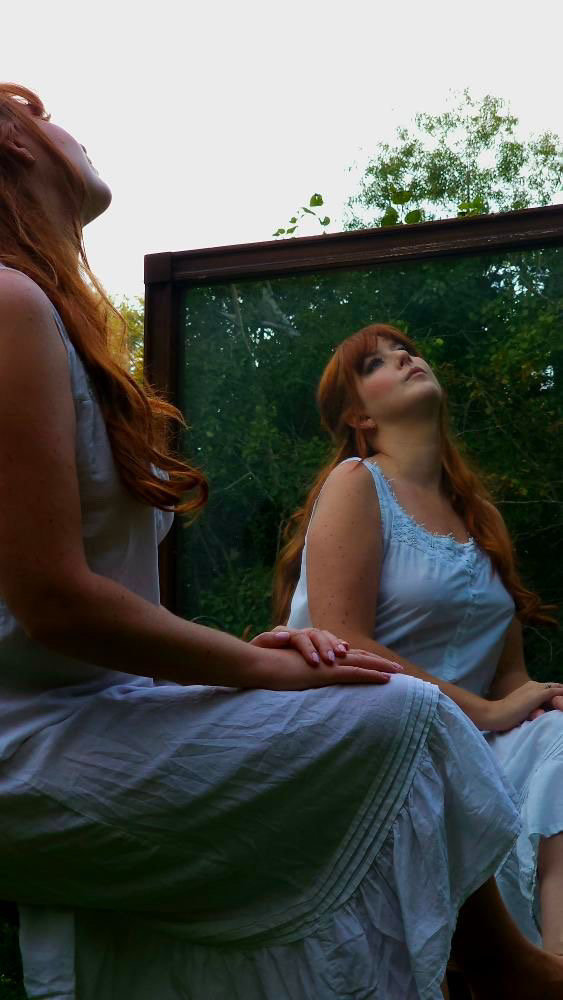
So with this record, Lady of the Moon, I kind of wanted to do something a little bit different where I still allowed my creative process to surface. So I started painting. I did a painting for each song on this record, so that I could do the visual art representation of what I was seeing in my head, and also still allow my creative process to shine through. I’m still thinking about maybe doing a video for this record, just because once in a while it’s fun. Doing it consistently, it takes away from the fun, if that makes sense.
I feel like it pulls away from the music too, because then it’s not about the message you intended when you wrote the song. Now it’s about the visual that is represented instead. And where you are when you create a video and where you are when you wrote a heart-wrenching song are completely different places too. So I’ve struggled a lot with that.
“I get really anxious when I’ve spent eight hours doing something for other people, like videos, whereas I could have taken that eight hours and I could have made a whole new song.”
– Kailan McGee
The Indie Distributor: I’m sure lots have. There’s also the interpretation of the visual aspect, which, like you just said, you’re in a different place yourself as an artist, but then if you have other people in the mix saying I get this sense from it, when you’re committing to a visual accompaniment it could be taking on a life of its own that you don’t expect. And that’s a whole other challenge.
Kailan McGee: Yeah, precisely. That’s exactly right. I couldn’t have said that better myself.
Advice for Artists Coming Up
The Indie Distributor: I’m intrigued to see what the next manifestation is if you decide to go the video route. I think the painting idea is exceptional, because it allows you to have a bit more control over the concept without having to go too far down the road on creating video content specifically.
I also wanted to talk about advice that you might have, now that you’ve gone through the process a couple of times writing full albums. What advice would you have for young, up and coming, potentially even female artists specifically, about what the experience has been and what you would impart to them?
Kailan McGee: Well, I find that to be a difficult question to answer, just because everyone’s journey is going to be very different. Everyone’s going to pull different things from it, and everyone is in such a different place in their head when they go through writing an album. If you are an artist who wants to release albums, then the only way you are going to get better and the only way you’re going to have more confidence in your work is if you just keep doing it.
The advice I always give is just have a pen on you. Put a notepad in your purse or your backpack and make sure you always have a way that any idea that comes to you, you can jot it down. I find physically writing it down to be a lot easier than even voice recorder notes, because I find even when I go back and listen to voice recorder notes and I hear the sound of my voice, I can hear if I’m stoked on the idea or if I’m not stoked on the idea, and that often has an impact for me. Whereas if I write something down, I know that that was an idea that I had for a reason.
So for female artists especially, the only way is to do it your way. There are no rules. You do not have to do anything you don’t want to do, and you can do anything that you do want to do. So do it your way, and that’s the only way that you will be proud of the art that you’re putting out into the world.
“Do it your way, and that’s the only way that you will be proud of the art that you’re putting out into the world.”
– Kailan McGee
What’s Next: The Minotaur, and Who Gets to Tell Your Story
The Indie Distributor: That makes a ton of sense. And it’s fascinating about the differentiation between a voice memo and a written interpretation of the idea, because I hadn’t considered that, hearing the tone or what headspace you were in when it was recorded, and having that possibly deter you from setting that idea in motion.
So obviously there’s the album coming up, the one that you haven’t committed to studio yet. What other major projects are on the horizon for pushing this record, but then also the next things?
Kailan McGee: This record right now, I’m kind of just in the land of still promoting it, because it’s not even a month old yet. So I’m still doing my best to push that where I can, and it’s really hard as an independent artist, as I’m sure you know. So any help in expanding and broadening any sort of horizons with an audience is so greatly appreciated.
My next record I am really, really excited about. I already have all but one of the visual art paintings done for the next album as well. The next album is going to be all about the tragic, downtrodden, and misunderstood characters in Greek mythology. I have a song about the Minotaur, for example, and how misunderstood he was, and coming into the world he couldn’t help being born. He couldn’t help the way that he had to survive.
It’s about being a misunderstood person throughout history, how popularity kind of translates through history and time as something different than popularity. Stories are always told throughout history and mythology a certain way. And when your rivals are painting your story for you, you can be seen in a different light. So how other people see you can often become your legacy. A lot of the album is kind of revolving around how characters have been so misunderstood in that light.
So I have that, and I have several other songs now that don’t fit on that record. So I’m also now working on the following record as well. I’m just doing my best to strike while the pen is hot and keep going when I can.
“When your rivals are painting your story for you, you can be seen in a different light. So how other people see you can often become your legacy.”
– Kailan McGee
The Indie Distributor: That’s enthralling, putting yourself in the perspective of ensuring that you always have empathy for the character, no matter how it’s been portrayed throughout the course of history. Do you find that it’s more difficult to write about something that’s many levels removed from yourself and your own lived experience?
Kailan McGee: See, that is the thing that I enjoy, the challenge of switching it up. So like I said, my debut record was all drawing on personal experience. *Lady of the Moon* is now an imaginative concept record. Now the next record, which I still have not decided on the title yet, that’s all stories that already exist, and my spin on those stories, and an empathetic look on these characters.
So it’s again another challenge, but storytelling is kind of what I’ve discovered that I prefer to do, rather than drawing on personal experience. Like I said when giving advice to other people, this has been something that I have learned about myself through this. If I didn’t push myself then I wouldn’t understand about myself that I really enjoy being that folk rock storyteller, rather than someone who talks about my own stories. Because that’s all already been done. Not that there’s anything wrong with it, everybody should write about whatever they want to. But I kind of like to have that cinematic feel when I’m writing, where I can imagine and the characters are just out of your grasp, almost tangible, and you’re creating this universe where you’re putting yourself in it and you’re immersing yourself in other people’s stories now.
So every time I write an album, I feel I’m going to put another spin on it that challenges myself in writing in another way, just because I feel like the only thing we can do as humans is always try and be growing, right? If we don’t look back on our past behaviour and cringe a little bit, that means we haven’t grown. That means that we’re not pushing ourselves to be better.
And so, people saying, well, I don’t know if this song is good enough to put it out. Put it out, because ten songs from now, whether you like it or not, when you look back at it, you’ve grown. So put it out. The world needs your thoughts. The world needs what you’re doing. And you need what you’re doing more than the world needs what you’re doing, because then you’re constantly challenging yourself. And that’s a part of this life. We’re mortal humans. We’re not here for long, so we might as well do our best to challenge ourselves and to grow into the best version of ourselves.
“If we don’t look back on our past behaviour and cringe a little bit, that means we haven’t grown.”
– Kailan McGee
The Indie Distributor: Well said. I look at some of the comments that you’ve made and some of the other artists that we’ve had on the program about music as therapy, which is extremely important. Not just for the audiences that we’re trying to communicate with and make a connection with, but for ourselves, as you say. That’s an imperative part of the creative process, that sort of healing that it allows us to do with self-reflection. I really admire that in artists, their ability to tell those stories in a way that’s fulfilling on multiple levels.
I look at some of the comments that you’ve made and some of the other artists that we’ve had on the program about music as therapy, which is extremely important. Not just for the audiences that we’re trying to communicate with and make a connection with, but for ourselves, as you say. That’s an imperative part of the creative process, that sort of healing that it allows us to do with self-reflection. I really admire that in artists, their ability to tell those stories in a way that’s fulfilling on multiple levels.
Any parting comments you would make to indie artists as they’re starting to come up through the world?
Kailan McGee: I think what I’ve already said in this interview. Just always do it. Your message deserves to be heard, and for yourself more than anybody else. And challenge yourself. Always try. Always put your best foot forward, always. And once you get really comfortable somewhere, get out of that spot. Try something else.
Once something starts working for you, don’t expect it to work the same way the next time with the same formula, because it just doesn’t work like that anymore. Constantly challenging yourself in the creative process is the best way through, and it’s the most authentic way through, because then you’re looking back on your own legacy as a songwriter and saying, I did exactly what I wanted to do, and not what someone else wanted me to do, or based on a formula that someone assured me would work. And like I’ve said, there are no rules in the creative process anymore. You just have to do you, and that’s it.
Streams Versus Substance
After the interview wrapped, the conversation turned to the numbers game that so many independent artists get caught in. It produced the sharpest line of the afternoon.
The Indie Distributor: What it comes down to is that you need to understand, as an independent artist, who you’re really communicating to. A lot of indie artists get stuck in this numbers game, streams versus authentic listeners. And then they get distraught and they sort of lose the plot, I find, when they don’t get the 50,000 listeners that you’re supposed to have as a baseline to be considered a success. I don’t know if you’ve run into the same thing.
Kailan McGee: I definitely have. And I kind of feel like what is punk rock is not caring about how many listeners someone has, and being there for the music instead of caring about those things. Because authenticity and being about the music does not mean streams. Every industry in our world, especially the music industry, is a little bit corrupt. So streams don’t mean anything, and your art does and always will, and your art will always live on. I think it’s kind of punk rock to realize that you’re choosing people that don’t have all of the streams to talk to, but that still go on creating the art. Those are the authentic artists that will carry on.
“Streams don’t mean anything, and your art does and always will, and your art will always live on.”
– Kailan McGee
The Indie Distributor: I love the music. I hate comparing, but it reminded me a lot of a Joni Mitchell and Loreena McKennitt mix. And just the world building, I think, is really exceptional. I don’t see that very often, to be honest.
Kailan McGee: I’ve heard Loreena McKennitt in a couple of interviews now, so that is high praise. Thank you so much. I liked building the worlds too. It gave my imagination a place to shine.
—
Kailan McGee’s concept album Lady of the Moon is out now.