
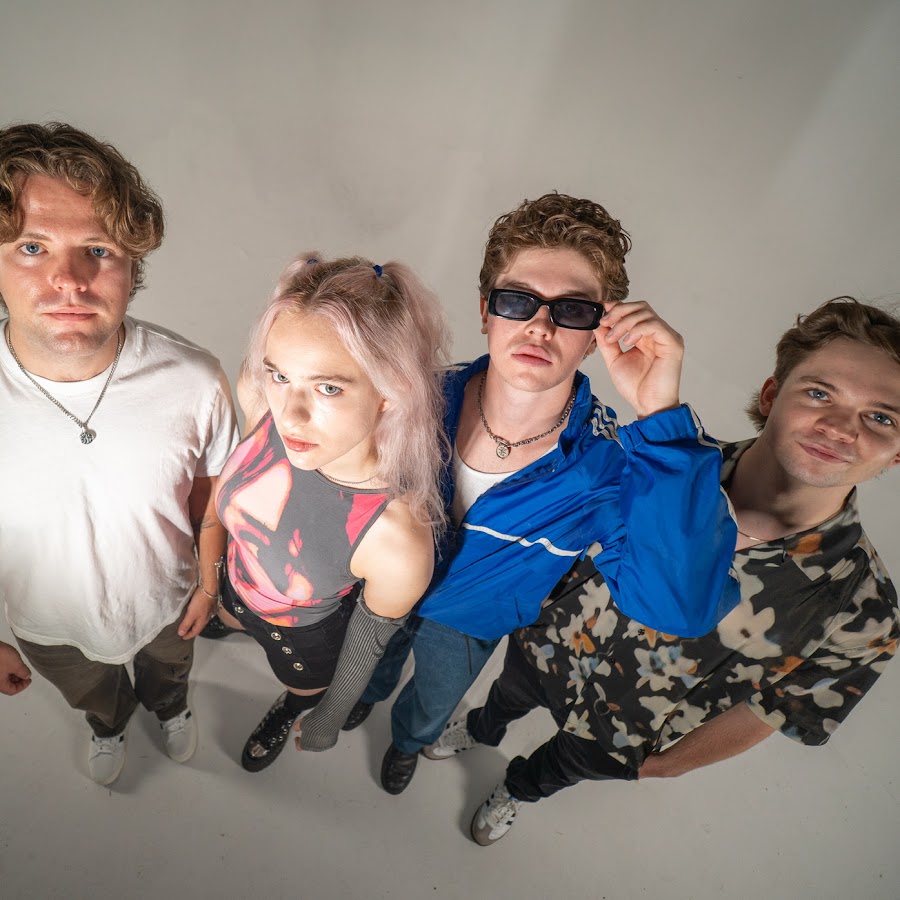
Some bands arrive fully formed. Others become themselves in the chaos of shared houses, basement demos, late-night rewrites, and the kind of chemistry you cannot fake. In Your Walls sound like a band built from exactly that kind of momentum.
In this conversation with The Indie Distributor, the Toronto-area group talk about their Western University roots, their unexpectedly fast songwriting burst, recording at Beach Road Studios, the unique and compelling worlds inside Bridget’s lyrics, and the balance between meaning, instinct, collaboration, and not overthinking the art. It is a candid look at a band finding its shape in real time, while keeping enough looseness in the process for the songs to surprise them too.
The Indie Distributor: Thank you so much, all of you, for joining me. I’m joined by In Your Walls, an incredible band. Are you based in Toronto, or where do you hail from?
Bridget Puhacz: Toronto. Scarborough for some of us.
Ryan Clark: Toronto.
Drew Glazier: Yeah, GTA pretty much.
The Indie Distributor: Nice. Awesome. Happy that you were able to join the Indie Distributor podcast. I work with The Indie Distributor, and I’m also in a band myself called Shoemaker Levee. We’ve seen each other at Gussapolooza, and it’s been fabulous being able to catch your set. I was hoping to get a little more information from all of you about how things came to be.
The first question I normally ask is: how did it get started? Any music documentary I watch, I’m always most enthralled by the coming-up story, how things sort of came together. Music documentaries usually gloss over that really fast. So maybe we could start there. How did things get started with you folks?
Bridget Puhacz: We were all going to Western University, and actually Carter and Ryan have been in bands together their whole lives basically. They’re like soulmate bandmates. So I had this band going and needed to find some new people. Thankfully Ryan was interested, and it’s a blessing to have him in the band. Then we got Drew like a year ago, and it’s just awesome. He’s a great drummer. We all went to Western, so it’s sick that we have that connection.
The Indie Distributor: Yeah, absolutely. Was this something you all kind of had going on in the background? Had you always been working in bands? Is this something you’ve always thought you wanted to do, or did it just start to take shape in the last few years?
Ryan Clark: I feel like I can speak for everyone here and say this is something we’ve always wanted to do. Even though In Your Walls really only took form as you see it now a year ago, like Bridget said, when Drew joined the band, we’ve all been in bands growing up. Bridget was always a musician and always playing music. You’ve always wanted to write music and be in a band.
Carter and I played in bands. I met him in Grade 9 basically, so we’ve been playing in bands since Grade 9. Then I met Drew in university and kind of introduced him. Bridget, Carter and I were living together, and we hosted a party. Drew came over, and we found Drew and Carter in the basement jamming while the party was going on upstairs.
The Indie Distributor: You’d rather be down here. That’s funny. I love origin stories like that. It’s great to see how things kicked off.
So I have to ask about the name. What’s the significance, and where did that originate?
Bridget Puhacz: Picture this. You’re standing on stage and you say, “We are In Your Walls.” That is the meaning.
Ryan Clark: And then people look around and they’re like, “Oh shit, I’ve got to go check my home.”
Drew Glazier: It’s memorable.
Carter Wega: None of us were even the ones who came up with that. I remember when Bridget started this band, Ryan wasn’t in it, I wasn’t in it, Drew wasn’t in it, and it was just little jam sessions in this church. One of the guys playing keys came up with that name, and Bridget kind of went with it. Now it just stuck.
The Indie Distributor: Really. No, I like that. It’s quirky.
I also meant to ask about the lyrics, because there seems to be, in some cases, this sort of ethereal space theme underlying some of the material. Is that a conscious choice, or do things just move that way when you’re writing?
Bridget Puhacz: For “Space Craze,” the first really space song, no, it wasn’t a conscious choice. I create these stories in my head and get really into them. I’m imagining what’s happening, and then, I don’t know, we’re in space, so that’s why. And for our new space song called “Men from Mars,” I was like, what if this was a sequel? What if Martians invaded the Earth? So that’s me making the story about what it is.
The Indie Distributor: I got it. And then does that tie into other themes, like with your new single “Blue”? Is that tied into the same type of ideas, or is it taking things in a different direction? I’m a lyric person, so I’m always interested in that.
Bridget Puhacz: For me, that’s a different universe. I guess it could be the same, because I just write. I’m not in control of how it’s perceived, in my opinion. But to me, everything’s related to things I experience, just abstracted. So “Blue” is related to living life and just working a job, but in this fictional universe, the government entity has put out a news broadcast that they’ve changed the colour blue. And you’re like, “What the fuck? Why’d they change blue? This is going to affect everything in my day-to-day life. What am I going to do?” But you have no control over it, and then the government’s like, “Yeah, it’s fine and the economy is great.” So that is the story of “Blue.”
The Indie Distributor: That helps things. I know what you mean about not necessarily having control over how lyrics are perceived, because someone else’s interpretation might be completely different from how you envisioned it when it first came to life, which is part of the beauty of music, I think.
Ryan Clark: Yeah, that’s why whenever someone asks what the meaning of the song is, I feel like the answer is always, well, what do you think? Instead of us trying to say what it is. That’s too complex because it’s different for me than it is for Carter, and even for Bridget or Drew.
The Indie Distributor: Yeah, that makes sense. I love that.
Was that one of the songs you cut at Beach Road, or were there different songs? What was that experience like?
Ryan Clark: It was sick. It was insane. You walk in and it’s your dream since you’re a kid to record an album in such an amazing studio when you have your own band with a band house. It was so cool. He’s got the wall of guitars. It’s all like that. It’s like this huge cathedral building. It was awesome. The experience was great.
We had gone in to record this upcoming album that’s coming out in April with like 30 songs, and narrowing it down to 10 was hard, but also kind of a fun way to figure out what we should do and what we were going to do in the studio. So there wasn’t much songwriting experimentation because we had written the songs, but it was more of a sonic experiment, figuring out different sounds and stuff.
The Indie Distributor: So you had 30 songs going into the studio and mentioned having to whittle that down to 10. Does that mean you’re intending to make that into an actual long play, an actual album?
Ryan Clark: Yeah. The 10 songs, yeah.
Bridget Puhacz: Yeah.
The Indie Distributor: And then “Blue” is the second single from that set?
Ryan Clark: “Men from Mars” was the first, and then “Blue” is the second. Then we’ve got one called “Jaded” coming out soon. But the album, we’re planning to release in April, the full 10-song record.
The Indie Distributor: Excellent. What was the process like to determine which songs made it and which songs did not?
Carter Wega: We started writing so far in advance that by the time it got to the studio, we were like, we’re going to have everything figured out. All 10 songs are going to be locked down. We’ll know every single detail of it. But going into it, I think we only had maybe seven songs nailed down for sure. So we had to choose the last 25 percent of the album while we were there, which was interesting, but it was fun.
The Indie Distributor: I can see that. Ultimately, what was behind the decision to select the songs? Was it because they were more connected with each other? Did you have input from Sigfried, or how did that come to be?
Ryan Clark: Sig was good with this. He was like, I’m going to let you guys figure it out, because he saw that if he really gave his opinion it would create a bias, because we kind of see him as the great, you know? So it was us trying to figure it out.
Carter Wega: It was similar to that. Even songs like “Blue” weren’t going to be on the album until the last little bit of the studio process. We had a few songs left and were like, okay, what do we want to do? “Blue” wasn’t supposed to be on the album, but then we kind of rewrote it and rearranged it the day we were recording it, or the day before.
So I don’t know. It felt not random, but we were just feeling it out and deciding what we wanted to do. I feel like there wasn’t any logic or structure behind it. We kind of just went with the feeling of it.
The Indie Distributor: I love that. And that ends up being the second single release. That’s fascinating. It wasn’t even a song you intended to have on the record, and then all of a sudden it takes second spot.
Obviously there’s also the video for “Men from Mars,” which looked like it was a hell of a lot of fun. A lot of indie bands struggle with determining not just whether to do a video, but where the idea is going to come from, where the money is going to come from, all those types of things. Tell us about how that process happened and how you planned that out.
Ryan Clark: I have a dog named Libby who makes a star appearance. We were kind of like, “Oh shit, what are we going to do for this video?” But we wanted to do one, especially for the first single, and we knew “Men from Mars” was a song that was hopefully going to grab people’s attention, so it only made sense to do a video that went along with it.
We were stuck on certain ideas, but then I don’t even know who came up with it. It was probably Bridget, I feel like, who was like, “Should we get Libby to come into the video?” Then it became, these men from Mars are coming to steal Libby and we’ve got to take her back.
The song itself, like we said before, you can find your own meaning in it, but if you look at it at face value, it can also be kind of a fun song, even though you can find deeper meaning in it. I don’t want to say it’s just a silly song, because it’s not, but we wanted to take that route with the video and make it kind of a silly video that went along with the theme.
Then we were like, okay, we kind of like the ’90s film style, like E.T. kind of thing. So we wanted the camera work to look like that, and the laser guns, all of it. We were fortunate enough that Bridget had the connection of her cousin, also named Ryan, who was the producer of that video and the main videographer. He helped us a lot with the narrative and the different scenes and everything.
The Indie Distributor: I wondered about that, because it looked like there was a lot of thought that went into the different sequences. You didn’t just throw it together.
Did you find it difficult to commit to the video aspect of the song, given that you wanted to keep the deeper meaning, but then there’s this layer of humour? Did you find it was a challenge to have a video interpretation and a song interpretation at the same time?
Carter Wega: I feel like it was because, like Ryan said, if you take the song at face value, you don’t want to say it’s silly, but it can be interpreted that way. And in that sense, keeping the spirit of that meant trying not to take everything too seriously. Once we decided what the video was going to be, it was like, yep, that’s what it is. That’s what it’s going to be. We’re going to have fun with it. We’re going to try to make it as best as we can.
Not putting so much pressure on it, even in the same way as people interpreting the song differently, different people will interpret the video differently. I feel like trying to take the pressure off yourself to deliver meaning and just kind of let the audience do that for themselves is a big part of it.
The Indie Distributor: I like the way you put that. It seems similar to what happened with “Blue,” where you took the pressure off and just let the song do what it needed to do, and then it took on a life of its own.
Ryan Clark: Definitely. And we were fortunate to have Ryan’s Bro help us with that video.
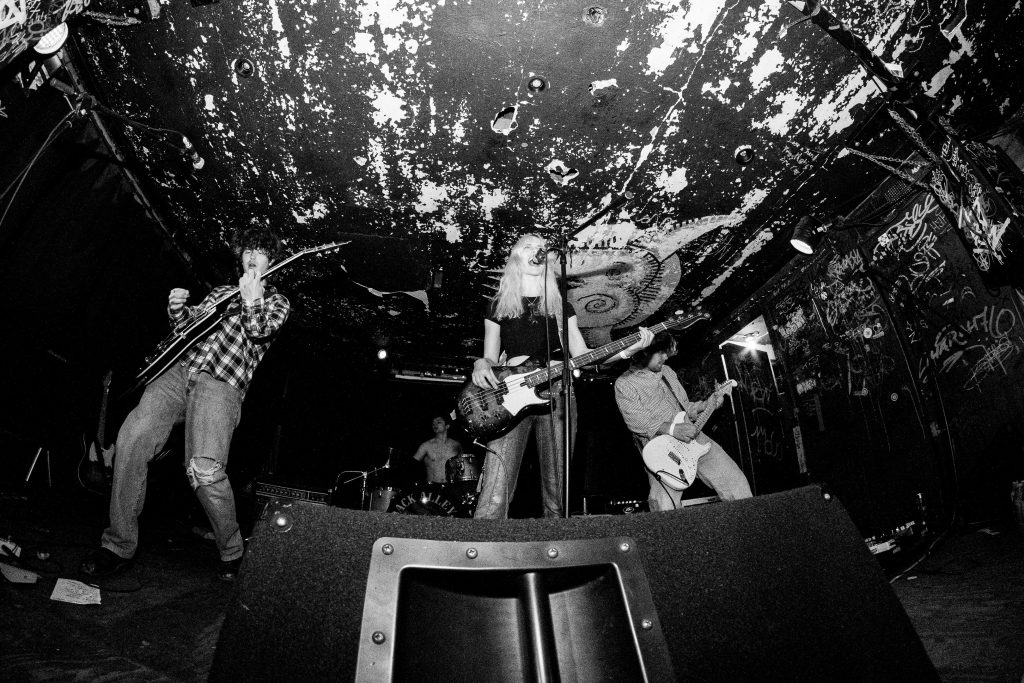
The Indie Distributor: Nice. It looked like a lot of fun and came together well. Of course, having a dog as the protagonist is always an advantage for everyone. Glad that no animals were harmed during the making of it.
Ryan Clark: None. She was good. She got many treats. We can promise you that.
The Indie Distributor: She looked quite content at the end of it.
You mentioned bringing 30 songs into the studio. Presumably, a lot of those songs were written over the course of quite a few years.
Ryan Clark: No. We really got into it in January when Carter and I were living together, with Bridget as well. Carter and I had separate rooms, and I put my bed into his room with all of my clothes, and we turned my room into a studio. Me, Carter and Bridget shared a room for four months so that we could write this album in the separate room. It was literally in our basement in London.
Every day, I skipped so many classes that last semester of school because I’d be in there with Bridget or Carter or something and be like, we’re so in the zone with this song, and I’ve got class in 10 minutes, but I’m not going. Fuck it. We’ll write this song. So really, four months was the big chunk of when all the songs were written.
The Indie Distributor: Wow. And then as far as polishing them, was “Blue” kind of the exception, not the rule? Did most of them come together and then you brought them into the studio thinking, yep, this is the way we’re laying it down?
Ryan Clark: Yeah, I feel like “Blue” was the exception. Most of them were written heavily in that basement on Logic, just on my laptop. I had an electric drum kit that I brought from home, so all the demos were made in there. From that, we got some outside opinion on what people liked and what we thought we liked.
In general, Sig, when we had recorded “White Lightning,” had said to us that he wanted to do an album with us, and we wanted to do that. He said, come to me with 30 songs and then you pick 10. So we really made an effort to do that. It was a lot of work, but we’re very happy with how it turned out. It was definitely worth it.
Carter Wega: Because the first 10 songs that we wrote, if that was just the album on its own, then it definitely wouldn’t have been as good.
Bridget Puhacz: One other thing is we also played so many shows in the summer, and then we recorded the album. So we were practising a lot, and songs kind of change just from playing them a lot. They become better because little parts change to make more sense.
The Indie Distributor: And the advantage of getting audience reaction too. If you’re unveiling those to a live audience, in some cases that can be a real advantage.
Ryan Clark: Definitely. Even now we’re noticing little differences in how we play them. We’re getting mixes back from the album and thinking, damn, we played it like that, but now it’s changed ever so slightly in how we play it live, even though it’s already been recorded. But that’s cool. I think that’s fun.
The Indie Distributor: It is. I think it’s good to have that diversity. Even though the audience will expect to hear the song the way they’re familiar with it from the studio version, as a band, sometimes you want to move things around a bit. There have definitely been situations where the guys and I have been like, I wish we had done that in the studio.
Ryan Clark: Yeah, definitely. But you have to appreciate it for what it is. The differences, I think, are cool in themselves.
The Indie Distributor: Absolutely.
So obviously the record is the big next thing. The plan is to release that in April, right?
Ryan Clark: Yeah.
Carter Wega: Mhm.
Drew Glazier: Mhm.
The Indie Distributor: And what do you have to support the record? Are you doing a tour? What’s on tap for the spring and summer?
Bridget Puhacz: We haven’t announced it yet, but we’re going to do our version of a tour, because it’s DIY. We’re going to play Ontario and then go out east all the way to Nova Scotia, PEI. We have a band that we know from there, so they are giving us advice, and hopefully we’re going to play with them a little bit on the tour. We’re really just reaching out to a lot of bands that we’ve met and trying to play with friends again, you know, have it be super fun.
The Indie Distributor: Love that. So that’s taking shape then. Tour dates haven’t necessarily all been nailed down yet. It’s something you’re still building.
Bridget Puhacz: Yeah, but there’s some dates.
The Indie Distributor: Cool. As they come together, obviously let the Indie Distributor folks know and we’ll be getting the word out about that.
Tying things together with wanting to encourage indie musicians of all types, what’s some of the stuff that you’ve learned through the writing process, the playing process, all of it? Any advice you’d want to give indie musicians as they’re just getting started?
Drew Glazier: Play as much as possible and play with as many people as possible. Create shows with people that you enjoy playing with, because you will play better if you’re hanging out with people you really like. Really enjoy it. If you’re not enjoying it, switch something up. Figure it out.
The Indie Distributor: Nice. I like that. Anyone else have advice to impart?
Bridget Puhacz: Can I give advice specifically to women?
The Indie Distributor: Yes.
Bridget Puhacz: Honestly, right now there are still so many men in music and in indie bands. Just know you might think that you’re not good enough, but you definitely are. I was very intimidated, and I still get intimidated because that’s just the kind of person I am. I’m shy and I have social anxiety sometimes, but I love playing music. So you can be exactly who you are. You don’t have to be like, “I’m a strong woman,” and have this girl boss attitude. If it really feels intimidating, you can just go in and be a girl that plays guitar, and that’s enough.
The Indie Distributor: I love that, and that’s great advice. We’ve all seen evidence of that for sure, and I think the more encouragement we can put into the industry, the better.
Anybody else?
Carter Wega: Maybe just keep doing stuff. It’s kind of like Drew said, don’t give up. As corny as that is, I feel like it is very true. My version of that is just always stay active. Try not to let even a month go by where you don’t do anything. Just keep going.
Ryan Clark: And I want to say that collaboration can be hard. It really can. Having four people on board with the same ideas and wanting the same thing, trying to figure it out with four people in something everyone cares so much about, it can be really challenging. But it’s important to remind yourself that you’re all working toward the same common goal.
Don’t get all worked up because you disagree on something. That’s normal and that’s part of the process. We’re all working toward something we really care about, so we’re all going to be passionate about it. A big tip is to accept those little differences in opinion and work on collaborating together because you’re all going toward the same goal.
The Indie Distributor: I love that. And that goal is what?
Ryan Clark: That goal is to make a living doing this shit, honestly. We love it so much. Being able to support yourself doing this and playing music full time and not having to worry about… we all love it.
Drew Glazier: I mean, I want to make enough money to fund my fingerboard addiction so I can keep doing kickflips with my fingers. And, like, be able to buy a bunch of frozen pizzas. Stuff like that.
Ryan Clark: And drumsticks.
Drew Glazier: Drumsticks too. Posters. Glasses.
The Indie Distributor: Those are very commendable aspirations right there.
So we’ll be watching for the record, of course, and then tour announcements. It’s been excellent having you all on and talking about what’s next and how things progressed. We’ll be watching for announcements, and I must thank you all very much for taking part.
Ryan Clark: Thanks. We appreciate it.