
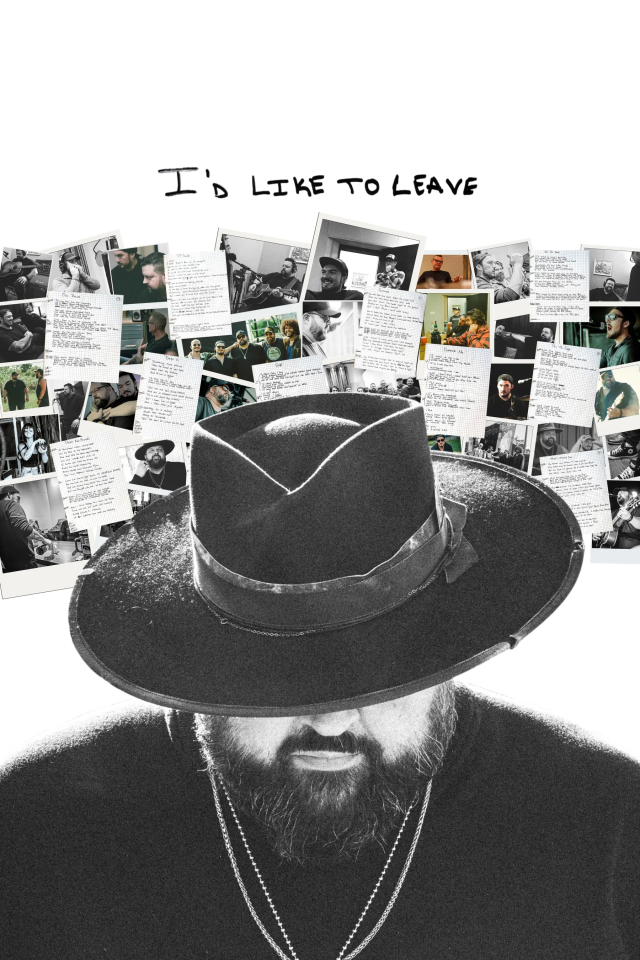
Pat James isn’t interested in chasing the Internet’s next shiny object.
In this conversation with The Indie Distributor, the Aurora, Ontario songwriter behind Pat James and the Whole Truth talks about why he finally committed to a full-length album, how he thinks about genre (and why he tries not to), and what “success” looks like when you care more about real rooms than big numbers.
Along the way, he gets candid about the pressure to get followers, the return of substance over scroll, and why a music video does not need a four-figure budget to hit people in the chest.
—–
The Indie Distributor: Pat James is here with me from Pat James and the Whole Truth. Thanks for taking the time to jump on the Indie Distributor podcast. Today we just wanted to catch up with you and get a sense of your origin story. I always want to ask about how things get started… so how did things get started? How did you get wrapped up in this crazy industry? What’s the origin story?
Pat James: I guess it really depends on how far back you want to go. If we’re talking the project, that was years and years in the making. I’d been in a few original projects in the last 10, 12 years. I’ve always been the primary songwriter, but I’ve never been fully the primary decision maker.
For anyone who writes music and performs in a band as a group, you generally have to give concessions to what other people want as well. Everybody has their input.
I tend to write across many genres when it comes to songwriting. So a lot of material that I had written over the years sat dormant because it didn’t really fit the project I was in at the time, or maybe it was a little off-brand. Eventually I hit a point where I was like, I don’t have a brand. Everything I write is me.
So this is the birth of Pat James and the Whole Truth. The idea that everything that I write, everything that I create is me, and there’s no real thought or consensus as to what that should sound like.
When I thought about putting this album together (I’d Like to Leave), there was a plethora of material to choose from, and this was just the first 12 songs we grabbed. There’s another album waiting to be recorded once this one is finished being promoted and played, and when funds are available, we’ll get there. But that’s really how I got here, just the need to express every part of my songwriting.
The Indie Distributor: You mentioned that it’s not necessarily classified by a genre, given that you’ve woven through a few different musical identities. Apple Music classifies it as Americana. I don’t know how you perceive what your brand is, and whether that’s something you’re going to lean into or not let define you as these new songs start to take shape.
Pat James: That Americana roots rock branding was chosen because when you upload music they basically make you put yourself in a box. They say pick the one that most represents, or pick three. You’re sitting there going, okay, in my 20s I was really into punk, and that comes out in some of the songs in the way that I write bridges and the rhythms I choose. Maybe not so much on this album, but in other songs. It’s really hard choosing what fits.
Working with some industry people, their best judgment was, use these tags because they give you the most left and right of the post. You can sit comfortably in there and not have to be super acoustic based. You can still be riff rock, you can still do this. I think it fits the overarching theme. In my songwriting, regardless of what it sounds like, I’m always trying to tell a story.
Every song has a beginning, middle, end. There’s generally a character you can follow through. So I think that’s very folk Americana storytelling. Maybe that’s why it fits.
But I don’t really know when it comes to genre. I try not to think too much about it because even subconsciously it will play on my thoughts, like, am I getting too outside the vibe? And I’m like, no, there’s no vibe. We’re just making music. Let’s do whatever feels good.
The Indie Distributor: I like landing on that as the ultimate decision, because one of the questions we dread, even though it’s genuine, is: what do you guys sound like? What defines your sound?
I saw some Instagram posts back when the record was being released about bringing back the full-length record and 12-song releases coming back. What was the discussion or decision-making process behind releasing an actual album rather than a series of EPs or singles?
Pat James: We did release singles off the album leading up to the album. We did follow the algorithm trend of trying to create that every 6 to 8 weeks, new music being posted. As much as I want to be the guy that says I’m going back to old ways and old media, we still have to play the game with the medium we have, which is online streaming. So we did release singles.
But the idea behind the album, for me, I always grew up with albums. I grew up in a time where it was normal to release an album. People talk about it all the time: the liner notes, the stories, the artwork inside. Being able to open up the CD. I was a little past vinyl. Seeing things that weren’t readily available because we didn’t have online, we didn’t have much more than magazines and MuchMusic.
Wanting to do the full album, wanting to create that experience, was something I’d always wanted to do. And for morbid reasons, I’m also a very morbid person. It’s not that I’m not a happy guy, but I definitely write from a darker perspective. I had a thought of like, well, I should probably release an album because you can get hit by a bus any day.
So to have a plan where the ultimate goal was to release an album one day was like, today’s the day. Let’s release an album. I can do whatever I want after that, but that was always an ultimate goal.
I’ve never released a full-length album before, and it’s taken me this long to get here. I’m 46. To me this is a bucket list thing to do and I’m really proud of it. I think it’s a really great album that people would enjoy listening to. Even if they have no idea who we are, there’s something on there for everyone.
The Indie Distributor: I love that. I’m also from the school of releasing full-length albums because it’s a statement piece of where the artist is at. It’s a snapshot. And it’s too bad that liner-notes experience isn’t really the same anymore. Watching how my kids interact with music, it’s transient. It’s not a sit down, immerse yourself, top to bottom experience. It’s single-driven. Hard to say that’s bad. It’s just the way it is.
Pat James: It’s just the way it is. Even with my son, he’s 10. I don’t push him towards music or try to entice him to pick up an instrument. But he does love music and he’s always singing. He’s singing whatever the trending audio is in videos. They might be songs from 40 years ago. It’s more like sound bites.
But I do think there are younger people looking for something more in-depth. We had this discussion at shows, especially outdoor festivals where it’s family. Canada Day or something like that. I had some under-20ish people come up after the show and say they really loved the set, and there was this one song that really, what was that called? It might have been three or four people out of a few hundred, but I was like, you guys just made my day.
There are younger people today who see the surface levelness of music. You could talk an hour or do a 10-part mini-series on that.
I do think there’s an overall trend where people want something of more substance. It’s not the norm, but more and more I’m hearing people talk about wanting more connection. Connection with family, friends, and in this case music, art, media. Less time scrolling, more getting out there.
As a band, I want to tap into that. I want to meet our fan base. When we’re at a show, I want to thank everyone for being there. I want to shake their hands. I want to take a selfie if that’s what they want. I want to let them know how appreciated they are for being there and being a part of it in real life.
The Indie Distributor: That makes sense. Time is such a valuable commodity. Someone takes the time to attend one of your concerts and actually listen, it’s mind-blowing.
I feel like we’ve reached an inflection point. Even my kids are anti-AI on several levels, especially in creative outlets. When it comes to the experience of sitting and watching a performer, I feel like the pendulum is starting to swing back. Indie musicians, it’s extremely tough.
Pat James: It really is. It would be very easy to try and write something catchy and gain traction online if that’s your goal today. For a long time we looked at social media like if we’re succeeding here, then we’re succeeding with our music. Big numbers means we’re important, we matter, a label or a festival will take us seriously.
What I’m trying to do, and what I talk about with other artists, is: I’d rather have an engaged fan base of a hundred people, or a thousand people. A hundred people in 10 different cities, and every time I go there, 50 show up because the schedule aligns. We’re engaged, connected, and we care about the same thing. Having a good time.
I remember playing a showcase with a band called The Road Heavy and a record label being there saying, “Yeah, you guys are great. Sounds good. You just got to get your numbers up.” I can’t remember the number, but it was like 20,000 followers across three platforms. I remember feeling sick about it. Like you’re ingesting poison. I know I’m not supposed to be doing this. This does not feel right. This is not why “young me” wanted to play guitar and be on stage in front of a mass audience feeding off each other’s energy. I didn’t think it would be hinged on how many thumbs up I got on the magic computer box.
It’s nice to see things change where artists are more genuinely concerned with the connection and building an engaged fan base rather than a massive fan base of people who liked a video because you looked good one time, or you did something funny.
You still do those things, you still show personality. I still try to post content. Well, I’m not allowed to post content. I have someone who posts and curates the page because I would post nonsense, movie clips. I understand that business side. You want to share relevant things online and keep the deeply personal stuff for real interactions.
But I like to see artists starting to see the importance of building that community, even if it’s smaller, but a community of people really invested in what you’re doing.
The Indie Distributor: If it’s just about the numbers, so much gets lost. Tried-and-true fans don’t care how many followers you have. They engage because they resonate with the message or the music.
Pat James: Two shows stand out to me. One was a concert in Detroit with a good friend to see Springsteen a few years back. That really did kick off the “I want to do this.” I knew I was gearing up for the project, and then I went to that concert and saw a stadium show performed for three hours. It was such a great performance, and done in such a way that you felt part of the show even though there were, I don’t know, 20,000 people.
The entire drive home I was rejuvenated, invigorated. People want that from a show. You watch a band perform, and if you connect and feed off that energy, it gears you up.
I didn’t leave there thinking the goal is I want to play the SkyDome [Rogers Centre]. I left there thinking I want to play a room with 50 people in it because I want to see everyone’s face. I know I’m not stadium guy. Maybe not yet. I want to try and achieve what I saw with Springsteen, but on my scale. What I define as success for me.
People ask, “Where do you see yourself in 5 years?” Honestly, I just want to consistently put 50 people in a room or 100 people in a room and tell some stories, connect. I love nothing more than playing a song and having someone feel it and relate to it. That gives me the same feeling as sitting in that stadium.
The Indie Distributor: I don’t want anyone to have to set their sights lower. You always have to have that fire. But the foundation is the connection, and it starts with one person.
I had a recent virality story. Over the holidays I posted a flippant video of my cats and my dog going around the Christmas tree. That got 300,000 likes and views. None of my other content reaches that. It’s a surplus of people paying attention for 15 seconds and then moving on. That can’t be what we’re striving for.
Pat James: As I hear you tell that story, my conditioned social media brain is like, “Oh, you should post that video again, but put your newest single in the background.” Isn’t it funny that’s where our brains go? Why can’t it just be awesome to watch a cat and dog run around a tree?
We’re always looking at how do we compound it, how do we get the most out of it. I think those moments when you’re just being you is what people can be drawn to. But you can’t be that all the time and you can’t manufacture it. It’s a fine balance. You can’t say I’m not participating.
Even your 50 to 100 followers want that cat chasing the dog. They want to see that side.
For me, I spend a lot of time driving. So sometimes I share what I do in my truck. I’ll record my road travelled. Sometimes I’ll post a snippet of my day travelling with my song behind it. Is it the best content? No. Is it going to go viral? No. But it’s the reality of my life. Or I’ll post videos of me singing in my truck. This is what I do.
The Indie Distributor: People want the human side, not just the polished, scripted version. They want the in-between. I think that’s why the Beatles Get Back series was so loved. It’s them just sitting around, bantering, working.
Shifting gears to video: the “Old Roads” video has that projector motif. For a lot of indie artists, video is a struggle, budget, storyline. Can you share what the inception of that video was like and how it got developed?
Pat James: Videos are a struggle because every professional person I spoke to was like, don’t spend money on videos, it’s a dead format, nobody’s doing videos anymore.
That took me back because I love videos. When I think of music videos, the first that pops in my head is Soundgarden “Black Hole Sun.” I don’t know why. I love MeatLoaf. I love music videos that tell a story.
Conceptually for “Old Roads,” we were sitting around saying, I’m older. We want to do this older thing, releasing a full-length album. So it fell in line with: what other things do we not really use anymore that I think are cool? Slideshows or projectors.
With that song specifically, I wanted to show the places I was talking about because I grew up in a small town. I grew up in Aurora. I watched it change. The song is about how you can live somewhere your entire life and the roads stay the same, but the landscape changes drastically. You might be on a familiar street that looks nothing like you remember.
It was this idea of going through time and photos. We expanded it to include some Toronto locations and places that may no longer be there.
The Indie Distributor: I did catch Sam the Record Man. Had to shed a tear there.
Pat James: Yeah. I tried to keep it to places I did have a connection to. I’d been to Sam the Record Man once or twice. The first music I ever purchased from a store was early 1990, 1991. My father took me to Toronto for the day, we were in an arcade, and we walked across the street into Sam the Record Man. I bought the Blaze of Glory soundtrack from Bon Jovi.
You miss that. People miss that. If you’re young today and you’ve never walked into an arcade and heard the ding ding, the pinball machine, it’s like everything today lives in the cloud.
That video for “Old Roads” was to show people: these are the places we used to go, where we used to hang out, where we used to buy music. The old brewery. Now you can get beer delivered to your house. It’s all very convenient.
I think I went more to the emotion of it, wanting to walk back through time and feel the song. When I saw the photos, it brought me back. We wanted people to feel the message of the song, not just hear it.
The Indie Distributor: That’s a helpful takeaway. Budgeting for video matters, but it’s not a case of “never budget.” In your case, nostalgia and emotional connection came through. A massive budget wasn’t required to get that one-shot thing.
Pat James: No, that was a budget-friendly video. The most expensive thing was renting the space because we wanted a specific open area and couldn’t find it for free. I paid a couple hundred for the space for five or six hours.
We shot that with a DSLR camera I’ve had since 2012. We shoot everything on an iPhone. With filters today you have everything you need to do a DIY version. People are used to seeing filters. If you want it grainy and old, there’s an app for that.
I remember doing a music video in a previous band and we spent $3,000, hired someone, took all day. It was the best music video I’ve ever been part of. Cool experience. But do you need to do that every time? Absolutely not.
Ninety-nine percent of people will watch it on their phone. They’re not going to throw it up on an 80-inch TV and inspect it. As an artist today you’re expected to wear so many hats. It’s to your benefit to figure out a way to make videos affordable, because you can use snippets for social media, engagement. Video is such a big one. Video and photos. You don’t want to spend a lot of money. You’re not going to get the return on your investment. People are expecting to see this stuff.
All of that is to say, you don’t need a big budget to try and make something artistic. Take your best shot at it. Take it less seriously than we probably ever did before and just make the video.
If you have $500, you’re probably better served spending $50 making a video, editing it yourself, buying some helpful editing software, and spending the rest on fuel, food, rooms and going to play shows a couple hours away from home. Try to connect with people. Record all that, use that for your next video.
Your money should be spent on quality recording audio and getting out to where you can meet the people and play for them.
We’re looking at doing shows around Northern Ontario. One weekend a month. Book three shows, Thursday, Friday, Saturday. Maybe a three-day trip costs $1,000 for food, fuel, hotels. That $1,000 is way more valuable than putting $1,000 into a music video for no one to watch because I haven’t gone out there to get them yet.
We have to be careful where we put our limited money, and our time.
The Indie Distributor: That actually addresses why this podcast exists. To encourage and be an educational resource for independent musicians. Great advice.
In the interest of time, to wrap things up, what’s next for you guys? What’s on the agenda for the next couple months?
Pat James: The album is fully released. We’re going to spend the next 12 to 18 months continuing to promote it while we set up these weekend shows. April, May, June is already coming together and we’ve applied to things.
We’re going out to Sault Ste. Marie. Real quickly to artists: don’t be afraid to travel. Sault Ste. Marie loves music. We had a venue offer to basically give us residence for the weekend so we wouldn’t have to find multiple shows to play.
The Indie Distributor: Is that to play your original music?
Pat James: Yeah, original music. They offered we’ll do an hour and a half and they’ll bring in a DJ after that. Because it’s a rarely travelled to location, it’s hard to get there unless you’re on the way out west. They appreciate bands coming out and they’re willing to put you up somewhere and help you out. Artists should consider that. Getting north of the city, don’t be afraid to travel. They’re more receptive to new music.
For us, the rest of the year is promoting the album. Revisiting each song more in-depth each month and sharing what the music is about from the writing perspective. Playing shows. We’ve applied to multiple festivals, Gussapolooza and things like that. Hopefully more festivals this year.
We’ve started jamming material that isn’t on the album. I have a pile of music waiting. The plan is to keep creating new songs so in the next year we can get back in the studio and do the follow-up. I haven’t decided if it’s another album, an EP. Now that I’ve done the album, I can breathe and say, maybe I want to bang off four or five songs live off the floor and do an EP of new material.
I remember growing up and there being recordings from shows. Release that stuff. If you can get a decent recording off the board, which is more possible now, release it. People want that. Even if it’s on your website, even if it’s download-only. Give your fans behind-the-scenes audio. They’ll listen if they’re into what you’re doing. Create that stuff.
Lots of ideas, but the plan is to share the music and play as many shows as we can for people interested in the music.
I’m done playing for people while they’re eating chicken wings. I did that for a long time. I played solo acoustic bar gigs where people didn’t care. Give me 10 people in a coffee house, or five people at a house concert any day over 200 people that could care less if I’m a DJ or whatever.
The Indie Distributor: I hear you and we share the same philosophy. Developing community is important, and collaborating with bands that share audiences makes a lot of sense.
Pat James: Absolutely. And I do want to say thank you for having me on the show. I appreciate what you guys are doing. We need more of it. We don’t have MuchMusic and Exclaim of a certain calibre to talk about artists. We need more platforms for artists to talk like this and share and create.
That culture, that energy: you put out music, you talk about it, there’s somewhere to talk about it, someone wants to listen. We have an audience. Our audience will see your show. Your audience will see our music. We create this energy around what we’re trying to do. If we all have the same mindset of building, we can only go up from there.
The Indie Distributor: Love that and couldn’t agree more. Thank you, Pat, for taking the time to come on the podcast.
Pat James: Thanks, The Indie Distributor. Thanks for having me on the show.
The Indie Distributor: Really looking forward to the next whatever it ends up being, EP or otherwise. And also looking forward to catching your set at WinterSong.
Pat James: We’re playing WinterSong on January 24th and I look forward to that. Hopefully we’ll catch a Shoemaker Levee set. Maybe we’ll even discuss sharing a stage one day. We’ll see if we can make that work. You find bands where you’re like, these guys are cool, I like these guys, I think we’d be good with these guys.
The Indie Distributor: Love that. Love it. Thank you so much again, Pat. Really appreciate you taking the time to come on here today.