
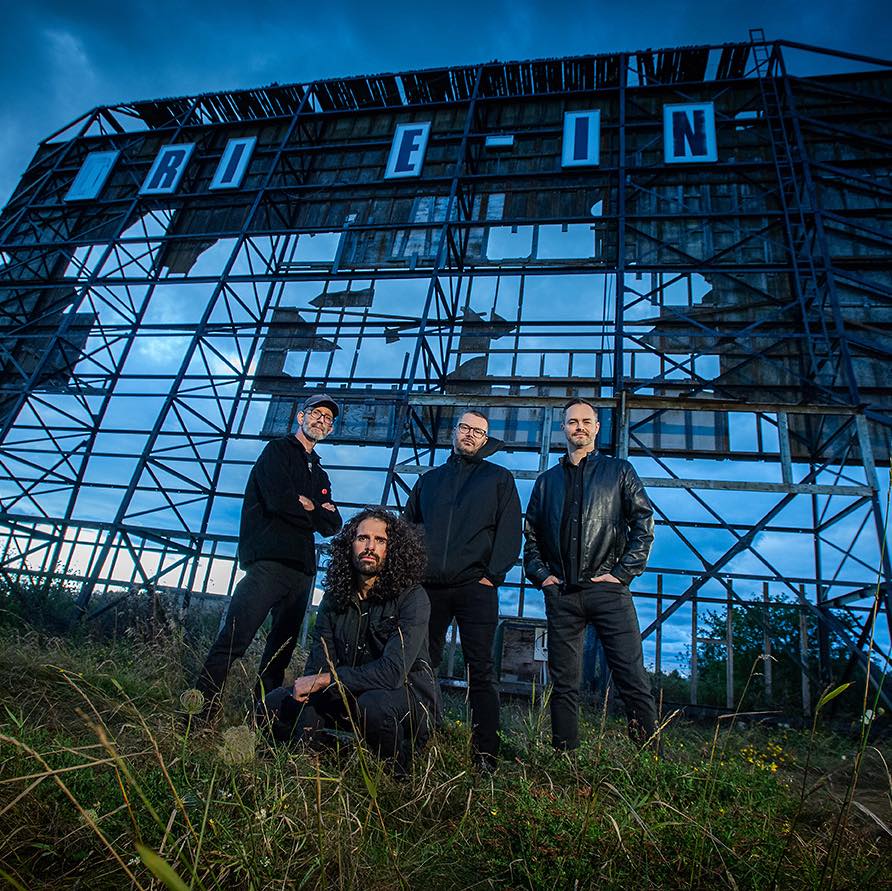
There is a particular kind of courage that stays modest, but still exudes strength. It looks like showing up, no matter what.
In this conversation, Face the Lion’s Anthony Rinaldi takes the band’s name seriously, tracing the long road from private songs and public fear to the decision to step into the indie music world and stay there. Rinaldi and Adam Skinner (guitarist and vocalist), talk through the things that test a modern rock band’s nerve: choosing quality over convenience in the studio, deciding whether to chase singles or commit to an album, and learning how to trust an arrangement when the room starts pushing back. It is part origin story, part reality check, and part reminder that the best bands are rarely fearless. They are just willing to face the lion, one song at a time.
—
The Indie Distributor: All right. Thank you for joining the Indie Distributor podcast. I’m the host, Kevin Rogers Cobus. I’m with the band Shoemaker Levee and also work with The Indie Distributor, interviewing bands about their process and their progress in the industry, and getting to know them a little bit better. Joined today by Anthony Rinaldi from Face the Lion, the epic band out of Barrie. Adam Skinner is going to be joining us as well. Anthony, thank you so much for joining us today.
Anthony Rinaldi: Thank you so much for having us!
The Indie Distributor: It’s our pleasure. The common thing that we normally kick off with is getting to know a little bit of the origin story, where things got started. You can go back as far as you’re comfortable, but I’m always interested in finding out how things came to be in terms of how the band was formed and how those things happened.
Anthony Rinaldi: Yeah. My origin as a musician, honestly, I’ve written music since I was a kid, but I was literally too scared to do anything about it for my whole life. I was too scared to sing in front of anybody. Any other musician I met, I always thought, man, why am I even playing? They’re just incredible. Like watching you two play, as a guitarist, when I see you guys live, I’m just like, man, you guys are incredible guitarists. And immediately, I always felt that little bit of, why am I even playing? Because there’s just so many amazing musicians and talented musicians.
And now that I’ve started this journey, I’ve definitely met so many amazing people and musicians. But yeah, I got to a point in my life where I was on and off with music, and it was just in my head all the time, writing these melodies. And then about seven years ago, I was like, “All right, I got to do something with these.” All these songs I’ve written since I was like 10, 11 years old.
Funny enough, my brother-in-law is Darren, who is our amazing bass player. He married my sister, I think it’s been like 13 years now. I could be wrong. He’s our bass player. Finally, I just said to him, “Let’s start jamming and have some fun and see where this goes.” We started jamming, we started putting pieces together, and here we are seven years later. It’s been a wild journey for someone who had zero confidence in playing music.
The Indie Distributor: I love that story. There’s a lot to be said for artists that are just getting started, that may have to overcome the hurdle of. Ultimately, how did you overcome that? You touched on “I have to get these songs out.” Was that the impetus behind pushing through it?
Anthony Rinaldi: It was a combination of really intense feelings of needing to get these songs out. But I’m also a hair stylist for a living. I talk to incredible people every day of my life, all ages. When you have so many different age groups in your chair, whether they’re healthy or sick, and they’re telling you their journey in life, I would question myself: if something happened to me, what would be one regret I’d have?
And that one thing was never doing anything with music, and never trying anything, because I had so much passion and love for it. That was the thing that kept replaying in my head. I just thought, you know what, I’m going to do it. If that’s the one regret I’m going to have, I’m going to do it. Whether I succeed or fail, it doesn’t matter. Just do it to complete your journey and soul in life, to make your soul happy. That’s where I started and made that dive. My brother-in-law Darren encouraged me a lot to go along with it. It’s been an incredible journey.
The Indie Distributor: That is so cool. I love that. I think that ties in to the next question. The name seems like it’s on that theme. What’s the significance behind the name?
Anthony Rinaldi: Pretty much facing your fears. Darren brought the name to the band. We took probably two years trying to figure out a band name. He brought this one to the band. He saw this picture in a novel. It was this child in a cage with three lions, basically face to face, and the child not scared at all. It was basically facing your fears. What are your fears in life? Just face the lion, face that line in front of you. That spoke to me. I loved it right away. I said, “Yes.” He’s like, “Yeah, I like it too.” Then the drummer and bass player were like, “Yep. That’s it. That’s ours.” Because we’re all kind of facing our own fears in some way. That’s how it stuck.
The Indie Distributor: Spectacular. It’s always good when you know the thing fits across the board. You’re like, “Yep, we can make a decision now.” I also understand taking two years for a name. That’s not uncommon.
So you’ve been releasing some singles. I saw three that are somewhat recent: “Lies,” “Comfortably Drowning,” and “All On You.” Are they part of a larger EP or LP that’s in the works?
Anthony Rinaldi: Yeah. I’m sure you guys have so many songs you’d love to professionally record and finish a full album or even a six or seven song EP. We all would love to do that and we all have songs ready to go.
We just finished recording those three and released in the fall with Kevin Deets at Union Sound in Toronto. We hope to get back in the studio as soon as possible to finish the rest. But if it’s delayed and we have to release another EP, we have enough songs for a couple EPs right now. We have a bit of songwriting ADD. We just love to create, all four of us. That’s what I love about the band. I’ve always loved to create and play originals whenever we play.
Although when we were playing Bracebridge Hall and watching you guys, you played that live song and everybody was singing along. I was like, you know what, we got to start playing a couple cool covers because you really nailed it, and you got everybody up singing and dancing too.
The Indie Distributor: Thank you. It’s interesting, what you said about playing cool covers, making them your own. That takes away some of the stigma of “we’re an original band, but we don’t want to go down the road of cover songs.” If you can put the Face the Lion stamp on it and say, “This is how we interpret this creative work,” it gives more versatility throughout your set. A lot of original bands wrestle with that.
Anthony Rinaldi: For sure. You wrestle too. As soon as you open your mouth for that first line, people are going to mimic how they’re used to hearing the song. It’s impossible, right? It’s not going to be a Nirvana song. It’s not going to sound like Kurt Cobain or Eddie Vedder. But if you can get people dancing and singing along with whatever you end up playing, it’s a good feeling.
The Indie Distributor: I agree. And part of the thing is making sure you continue to have fun with it. As long as you’re having fun and people are familiar with the material, they’ll go right along with it.
The Indie Distributor: Adam, how are you doing?
Adam Skinner: I’m good. How you doing? My apologies for the delay.
The Indie Distributor: No, you’re fine. All good. We were just talking about compiling some of the songs you’ve written recently into a possible EP or LP down the line. The vote’s still out as to what the final product is going to be. I did have a follow-up question. The sentiment around whether you’d rather release a full-length album, or do you want it to be an EP. Have you had conversations like that? Is there a preference? What does the dynamic look like?
Anthony Rinaldi: We talked as a group about what’s realistic of what we can record for this year. We all agree that anything we record, we want it at the highest quality. So if that’s spending a little bit more money, even if it’s just three songs right now. We’re happy with our engineer, Kevin Deets. We’ve been using him for years, all three EPs. We’ve recorded at Metalworks and Union Sound. They’re great places. I don’t mind spending more money. I want it to be as good as we can get it.
We’ve had this discussion. What’s best, because everything is changing now. Do you put all your effort into one album and it’s gone like that? Or do you spread out singles and keep yourself current? With social media, keeping the band releasing new stuff every week, content. We chose to release a single every month this time around to keep it fresh.
Adam Skinner: The landscape has definitely changed in that regard. Having the ability to continually come out with content. In theory, you can put it all into a full-length, 10 song album. That was more of the CD generation, the tape generation, the album generation. But it still happens and it’s still fine. I’m okay with doing that.
The question is, I don’t know if that’s necessarily the goal. We’re basically just writing songs, and as soon as we have a collection we’re happy with, we jump in the studio. That’s what we just did. I’m not against going full-length. Obviously, we could do that two or three times and then say, “Hey, let’s slap these all together and call it an LP, a full-length.” LP is long play. I think that’s what it originally stood for.
The Indie Distributor: In a sense, a lost art. We’ve had multiple discussions about it in our band. We’re probably more old school than not, because we still remember the glory of sitting down with a record, listening end to end, going through the liner notes.
But a new crop of people have a different experience. It’s almost like a more transient exchange with music, listening while doing something else, going somewhere, consuming it in the midst of doing something else, as opposed to an assigned activity. It makes it different. We released basically three LPs. The only physical one we got made was the first one. The other two don’t have any physical copies. Then it reaches this point of, is there a point to doing this? I’m always curious to find out your feedback.
Anthony Rinaldi: I really miss going to the music store every Tuesday, buying that new album, and then sitting in my car either going for a drive or just sitting there and listening to the full album. That experience, I truly miss.
The Indie Distributor: It’s interesting now, not only is that a different experience, but when it comes to singles and the rapid pace people consume music, you’re not competing with other indie artists necessarily. You’re competing with David Bowie, Led Zeppelin, the Beatles. Because my kids, I’ve got two girls, 14 and 11. The way they consume music, their playlists are completely varied: new artists, indie artists, and very established artists. That’s where you’re competing for attention, and the playing field is so much broader.
Adam Skinner: It’s almost like a YouTube short versus a YouTube long form video. TikTok has consumed the short attention span. The attention span is being trained to be shorter and shorter. I try to keep my kid off the short form stuff. Anytime he gets to the shorts, I’m like, “No.” It’s either long form or it’s not happening right now. Training the brain to doom scroll, it’s shrinking our attention span quickly. We have to deal with that landscape, which is changing. So from now on, our songs are only a minute and a half.
The Indie Distributor: All kidding aside, the format seems like the industry is leaning that way because of shorter attention spans. However, there’s always going to be a camp of people that like long form content, immersing yourself in a subject. I don’t think there’s ever going to be a situation where there isn’t a place for an LP, or a 19 minute opus jazz odyssey style thing. There’s always going to be an audience that wants to dig deeper into the catalogue.
You mentioned Kevin Deets and the engineer side. Do you also work with a producer, or do you do your own production?
Anthony Rinaldi: We do our own and Kevin helps us with it as well.
Adam Skinner: Kevin’s a great producer. He wears two hats in that engineer-studio role, which is great.
The Indie Distributor: What does the writing process look like for Face the Lion?
Anthony Rinaldi: Adam joined last year. Previously, I would write a tune, record it on GarageBand or something, send it to the guys, and then we would make it our own. Now with Adam, it’s been amazing because I have a writing partner. He was the lead singer and writer in Atlantis Blueprint, which was an amazing band. I looked up to him as a musician. Now we throw ideas at each other all the time, whether it’s lines for a song to finish a chorus, or adding a bridge. It’s nice to shoot ideas back and forth. We’re very similar in our style and what we enjoy by ear. It’s huge for me because I’m learning a lot from Adam.
Adam Skinner: It’s funny. Anthony and I were driving down to a gig and I was like, “I got to show you these cool new rock songs.” Every single one I showed him, he’s like, “Yeah, it’s already on my playlist.” We definitely have the same interests, which helps with the writing process.
The Indie Distributor: Anthony, being the solo songwriter previously, and now working collaboratively on lyrics and arrangements, what adjustment have you made in your style knowing that’s the new way?
Anthony Rinaldi: Adam found out very quickly that my only thing I really present to the band is the emotion I can put towards something. Adam can kill his guitar and drums and whatever he touches, vocals, everything. The only thing I feel like I really have to write about is whatever my emotions are at that time.
To work with somebody like that, to bounce ideas off, it’s been great because sometimes you need to construct more than just pure emotion, and I’m learning that. It’s been an easy transition, to be honest, because for me it’s not about what our band was before Adam. It’s if we are going to be better and sound better, I’m all in. I’ve learned from Darren, I’ve learned from Nick as a drummer, and my focus each year is getting better as a musician and more confident. With Adam, in a year I’ve had way more confidence.
Adam Skinner: You’ve stepped up a lot. And the interesting thing about what we did yesterday. We always jam on Tuesday nights. We found the “okay, we don’t have a show coming up, this is going to be an entire writing session.” Anthony has this great new song. We all sat down with it. Nick is really great at arrangement. He’ll say, “Hold on, we’re doing eight bars there going into that, let’s cut it down to six, let’s try this different thing.” We just try stuff all night for hours, tweak it, tweak it, tweak it until we’re like, “Okay, that’s it.” We give everything its proper chance.
You change something, you try it, it’s sloppy, you’re like, “That didn’t feel great.” But it’s like, “Yeah, we didn’t even hit it.” Our rule is give it a chance and feel it. We’re like, “Hold on, let’s get it two or three times until we get super tight, so we can really tell if it feels right.” We record it too, so we can go back and listen to different takes.
Darren’s coming up, like, “The lyrics are a little too repetitive there. You got to tweak something.” We changed how the vocals are going to go. Everybody throws in their own thing, which is great.
And in the initial stages, Anthony and I both use GarageBand. We should probably be using Logic or something more advanced, but GarageBand is so easy to throw stuff together. It’s not like we’re putting it out there. The cool thing is I write a structure, send Anthony the GarageBand file, and he puts lyrics on it. Or vice versa, he writes something, sends it, and I make tweaks. We’ve done that quite a few times. It’s useful.
Anthony Rinaldi: Our last single, “All On You.” I woke up one morning to a message from Adam with this amazing arrangement with no vocals. Adam’s an insane vocalist, and I was like, “That’s weird. He didn’t have vocals.” He always adds vocals. He wrote, “I need you to write lyrics to this.” I had just lost a friend, and when I kept listening to it, I just kept hearing this song for my friend. It came together so quick.
It’s been awesome to have that. I’m usually the one hearing the arrangements in my head, but this time I sat in my car for weeks and listened to the arrangement he made, and I had to create a song without changing anything. It wasn’t my guitar parts that I wrote. So I shot back lyrics.
Adam Skinner: Your lyrics are great and the melody was great. I was so excited when he finally sent back the track of his vocals. I listened like 10 times in a row. I was like, “Oh yeah, this is good.” Then I started down the harmony route.
Anthony Rinaldi: That’s fun to me.
Adam Skinner: That was a lot of fun. We got to do that more.
The Indie Distributor: It’s fascinating to hear various styles of writing and how things come together. Nothing wrong with GarageBand. If that’s your pre-production process and it’s clicking, it works. People shoot voice memos back and forth.
Anthony, sorry to hear about the loss of your friend.
I have a question that has to do with an interview you did in 2011, and references to lyrical absence of substance in today’s music. Firstly, do you feel that’s shifting given the temperament of the time? How does that affect your writing? Do you feel like that trend is shifting now?
Anthony Rinaldi: It’s hard to say. There are so many amazing bands out there writing incredible music. For me, all I can say is I write with emotion, write what’s real to me. For me personally, I use music as therapy. When I drive home, it’s always on. I’m listening to our stuff, or music in general. I’ll sit in my driveway sometimes for a couple songs because I live close to work, so I only get one or two songs in, and I’ll just sit and listen. That’s the basis of why I wanted to become a musician. If I can make somebody feel good by writing music, and they sit in their driveway and listen to a couple songs and feel great after, that to me is why I do it.
That’s the power of music, healing people. When people come after your show and say they loved your music, that’s an incredible feeling. That’s all I want to do it for. If I can help other people the way music’s helped me, then I’m doing my job.
To answer your question, it varies. Pop music, the hits, it doesn’t really engage me. But I hear local music and local bands singing and I’m engaged because I can feel their heart pouring out on the stage.
The Indie Distributor: I love that. The comment struck me because when trends occur and world events are happening, music can be a mirror to the sentiment of the populace. We’ve gone through phases where lyrical content feels safe. And now, I’m curious if that evolved for you given recent events, not getting political.
Anthony Rinaldi: I would say “Lies” could be political. The song I wrote, I didn’t want to make it seem that way. It could be anything. It could be you’re tired of people leading you in the wrong direction for their own benefit. That idea came from lies people are telling you so you go down the wrong path, for them to benefit. I didn’t want to take sides, but it could be taken as political. I made sure it didn’t come across that way. You could listen to the song and connect it to something that happened in your life where someone’s taking advantage of someone’s kindness for their own benefit, financial or otherwise.
The Indie Distributor: In some cases it’s difficult to come right out with the explanation of what the lyrics mean. And it’s almost a similar conversation to what you touched on in that interview when someone asks, “What type of music do you play?” It’s one of those questions you kind of dread. “I don’t want to sound presumptuous, but we don’t go for one particular genre.” I think that’s similar in your case too, right?
Anthony Rinaldi: Yeah. For sure. You don’t want to label yourself under one thing because someone might say you’re not grunge or you’re not indie. We’re just putting music out, and if you enjoy it, you enjoy it. We hope you do.
Adam Skinner: Just say rock. I’m like, “We’re a rock band.”
Anthony Rinaldi: Yeah.
Adam Skinner: And then you get, “Oh, like screamo?” and you’re like, “No, just rock.”
The Indie Distributor: How many classifications are there, thousands. On the other hand, the industry leans on you to say, no, you’ve got to work on your elevator pitch so people know what to expect. How do you balance that? What’s your elevator pitch?
Adam Skinner: I usually say our influences. I’m like, we’re rock, and then they’re like, can you get deeper? I’m like, we’re really influenced by 90s rock. As soon as I say that, they go, “Oh, okay,” and they capture what we’re doing. We’re so influenced by it that it comes out in our music. As soon as I say that, people’s eyes open up.
Anthony Rinaldi: Yeah. You could say 90s grunge. But I also say Adam and I love the Beatles and we love harmonies. When he joined the band it was like, “All right, now I have somebody to sing with.” We knew our voices melted well together. We wanted that old school rock sound mixed with grunge and that soul. That’s how I explain it. It’s a little bit of everything.
Adam Skinner: On the vocal thing, last night Nick’s on his phone playing drums, we’re testing something out, harmonies. I was trying to find the right harmony and it’s tricky because he’s at such a high note. Where do I sit? Below him, above it? Too high. Anthony sometimes goes, “Why don’t you just hit the exact same line I’m singing.” As soon as we did that, Nick did one of these. Then Anthony and I are like, “What, was it bad?” He’s like, “No, it shocked me how great it sounded.” We were like, “Oh man, was that bad?” That’s our first reaction. He’s like, “No. Do it again.” We matched the exact same pitch. We hit the exact same line, but we have such different voices. Anthony’s got this gritty rock voice and I’m smoother, different tone. We hit it at the same time and he jumped off his chair.
If it’s not stuck in your head enough on loop that you’re making fun of the lyrics, was it worth it? The whole time we’re packing up, that stuff happens. It’s a good sign.
The Indie Distributor: Love those moments when things click. What’s next? What’s on the plate for the next couple of months?
Anthony Rinaldi: We finished playing at the Horseshoe Tavern two Saturdays ago. We’ve been lucky enough to play there twice before, but during the week. This was an amazing night on a Saturday night. The room was great, the sound was great, I thought we played pretty solid, and the three other bands, In Your Walls, 40 Hours Over, and Full Throttle, were awesome. Amazing people. It was a wonderful night from beginning to end.
What’s next, we have a show at Bracebridge Hall in March. We were going to play another show in Toronto but we weren’t able to make it. We’re writing like crazy right now. We’re debating if we’re going to get back in the studio as well and record a few extra tunes to add to the LP or something separate.
Adam Skinner: We’ve got probably four new ones since the EP, I think.
Anthony Rinaldi: Yeah. And we have so many other songs we haven’t recorded yet, that we’ve had for about five years too, that we play live but never had the chance to record.
The Indie Distributor: It’s great to have a stockpile to draw from for the next plans.
Anthony Rinaldi: We’re hoping to have a busy summer playing live. We love playing live. We had a busy summer and a busy winter. Now we’re taking time to write. I know you guys as well, with your drummer being off for a little bit, you had time to sit and write as well. It’s important to have those periods. Not always jamming for the next show. Take some time and write songs, revisit old ones and finish them properly, or explore new ideas.
Like I was telling you before, we’ve got songwriting ADD. Any new idea we have to work on for like five hours straight.
Adam Skinner: The shiny new thing.
The Indie Distributor: Better than the alternative, being stuck for ideas.
Adam Skinner: New songs are the fuel of a band. If you’re not writing new songs, it starts to stagnate quickly. New songs are critical. Sometimes you get stuck in ruts. I bought one of those frustrated songwriter handbook things. Most of those get you to break out of writer’s block. Write three songs in half an hour. No time to think deeply. You just hammer something out. It gets you back into spitting stuff out and not worrying if that chorus is similar to that song. Just spit it out as fast as you can.
The Indie Distributor: Writer’s block is a real thing. That’s a great point. I tried the 52 song project, a song a week. There’s a bunch of junk in there, but there’s some stuff I go back and listen to and I can grab a piece and put it somewhere else. There’s value in doing those activities to test your creative muscle.
Anthony Rinaldi: The song we were jamming to last night, I wrote on New Year’s Eve. I sat in my room for four hours straight. You know those ones that come out so easily. The band liked it. It was the best feeling in the world. We wrote “Lies,” “All On You,” “Comfortably Drowning,” and they came out kind of quick. Then we were busy performing. I had splashes of ideas, but this song was on loop in my head all day and I had to get it out. Showing the band, and then we make it our own, everybody gives ideas, and last night was so much fun. That’s the joy of being in a band. When we have a song, whether it be Adam’s, mine, whatever, and everybody likes it and feels good about it, it’s such a wonderful feeling.
Adam Skinner: Everybody was firing on all cylinders last night. Nobody was like, “Not that bridge again.” Everyone’s like, “Okay, let’s try it this way, let’s try it that way.” No time to sit around and debate. Nick comes up with ideas all the time. “What if the ending, we didn’t do that, but we did these hits and then this thing.” Then we tackle it. Try it three times until it sounds reasonable so we can see if it’s good.
Our writing process is becoming more refined. It used to be writing in between jamming songs. If there was a lull, we’d be like, “Okay, jam the next song.” Now we dedicate an entire session. “We’re going to work on that song the entire time.” No rush. Everybody takes a deep breath and works through things.
Anthony Rinaldi: This morning I was like, is this a really good song because it’s on loop in my head, or is it because we played it for six hours last night? We kept playing it over and over. In my head this morning, I’m like, “Oh yeah, it’s good.” Then I’m like, “No, I think it’s because we played it over and over.”
The Indie Distributor: Any advice for indie musicians who are just getting their feet wet?
Adam Skinner: Anthony, wait. Sorry, before you answer that. I got to pick up my kid, so I got to go. I’m sure Anthony’s going to have great advice.
The Indie Distributor: It’s great to see you, Adam. Take care.
Anthony Rinaldi: Any artist, going from being scared to sing in front of anybody to starting at small venues, going up and playing open mics by yourself and being nervous. If you love it and you’re passionate and you’re open to learning and working with others. Years later, this summer we were lucky enough to play Kempenfest. That was our biggest crowd. We opened for Colin James. I look back from seven years ago, from playing open mics to that. It’s an amazing journey. I’ve met so many amazing bands, like you guys, and people, and the community.
The advice is, if you love it, it’s not easy. It’s a lot of work and time. But if you love it, it doesn’t feel like that. You’ve got to put the effort in and keep going at it. If you’re not in the right environment, you’ll find the right environment if you like it and you’re open to wanting to get better. That’s my whole thing. Learning, wanting to get better, wanting to put good music out, not being scared anymore, and just letting it all out, letting me be me. Hopefully people enjoy it as much as I love listening to music. It’s a wonderful thing. The cool thing is the music community is amazing. You guys have been nothing but great people for us, encouraging us. Watching each other play over the years has been awesome. I wish everybody good luck in their journey too.
The Indie Distributor: Well said. Anthony, thank you so much for taking the time. Can’t wait to see you guys play live again, and I’m looking forward to what’s next from Face the Lion.
Anthony Rinaldi: I appreciate you having us. Thank you so much.